Mammoth-Saint Anthony Mine (Tiger)
32.7064° N, 110.6847° W · ± 1 km
Vanadinite from Arizona, United States, with photos of specimens from this locality.
Minerals found here
Vanadinite at Mammoth-Saint Anthony Mine (Tiger)
Small orange-brown barrels lining vuggy limonite matrix
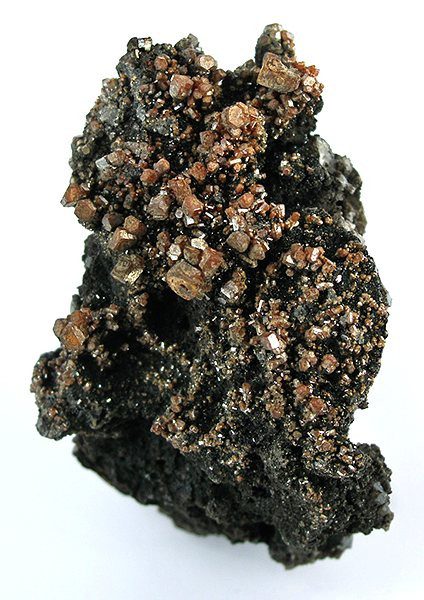
Photo: Robert M. Lavinsky · CC BY-SA 3.0 · Source

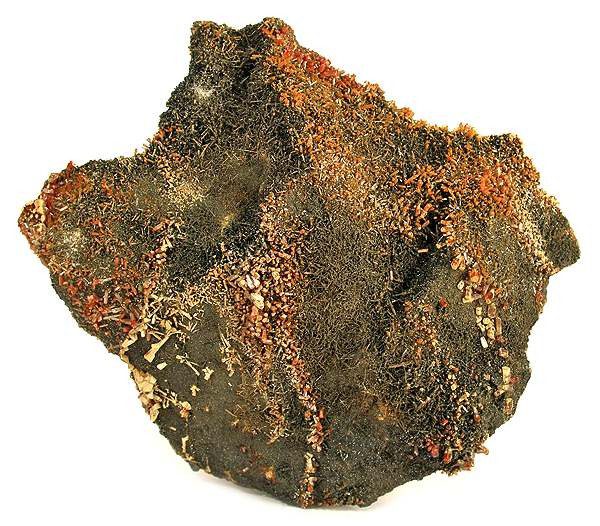
Photo: Robert M. Lavinsky · CC BY-SA 3.0 · Source

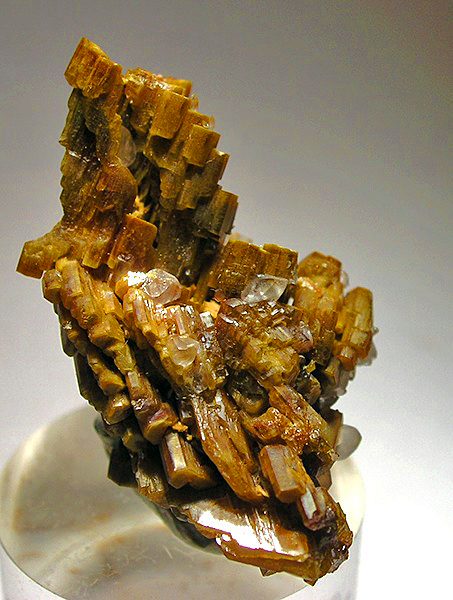
Photo: Robert M. Lavinsky · CC BY-SA 3.0 · Source

- Formula
- Pb₅(VO₄)₃Cl
- Morphology
- Barrel-shaped crystals, in places forming intergrown clusters
- Typical size
- Crystals to about 4-5 mm
- Color / luster
- Orange-brown, lustrous and translucent
- Associated minerals
- Limonite
- Availability
- Scarce
- History
- The mines reopened in 1915 for molybdenum and vanadium; Mammoth and Tiger together produced about 2.5 million pounds of vanadium, and the mine was worked for vanadium again in WWII
Geology of the locality
- Setting
- Gold-lead district with veins in shear zones cut by quartz and calcite, with some barite and fluorite; oxidized ore carries vanadium minerals including vanadinite
- Type
- Hydrothermal
- Host rock
- Oracle Granite, andesitic to dacitic breccia and conglomerate, rhyolite
- Region
- Arizona
- Country
- United States
Coordinates from the Wikipedia entry for Tiger, Arizona (Mammoth Mine at 32 deg 42' 23" N, 110 deg 41' 05" W). Worked for vanadium and molybdenum in WWI and WWII.
Sources
- SRC-362 · Website
Tiger, ArizonaWikipedia contributors · Wikipedia - SRC-363 · Database
Mammoth Mining District, Pinal County, Arizona (Mindat locality 12770)Mindat contributors · Mindat.org - SRC-364 · Website
Vanadinite photo file pages on Wikimedia Commons (dealer descriptions)Robert M. Lavinsky (photographer, Wikimedia Commons) · Wikimedia Commons
Draft data from the Provenite workbook. Check entries against the cited sources before relying on them. Photos are open-licence images from Wikimedia Commons; the author and licence are given with each photo.