About Aquamarine
Be₃Al₂Si₆O₁₈
Aquamarine is the blue to greenish-blue variety of beryl; emerald is the green variety of the same mineral. Its colour is tied to iron: ferrous iron sitting in the open channels of the beryl structure absorbs in the near infrared, and an interaction between ferrous and ferric iron has been proposed for the more intensely blue beryls. Because it commonly grows as large, clear, well-formed prisms, it is a favourite of mineral collectors as well as a gemstone.
Photos of Aquamarine
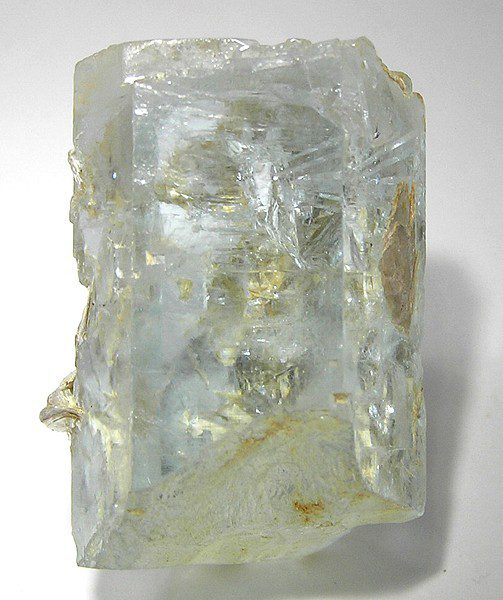
Doubly terminated gem aquamarine floater with muscovite, labelled Skardu, Pakistan.
Photo: Robert M. Lavinsky · CC BY-SA 3.0 · Source

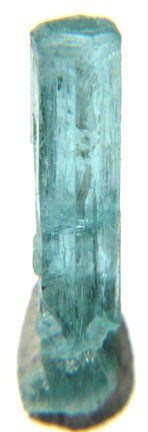
Small terminated aquamarine crystal 1.7 cm long from Mount Antero, Chaffee County, Colorado.
Photo: Robert M. Lavinsky · CC BY-SA 3.0 · Source

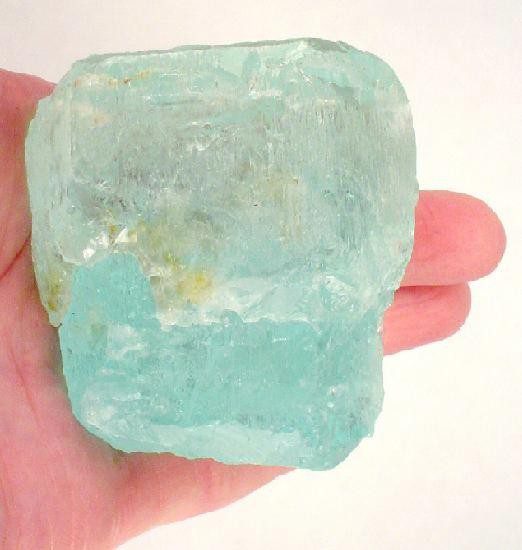
Large, doubly terminated, sceptred aquamarine crystal from Dassu, Shigar Valley, Pakistan.
Photo: Robert M. Lavinsky · CC BY-SA 3.0 · Source

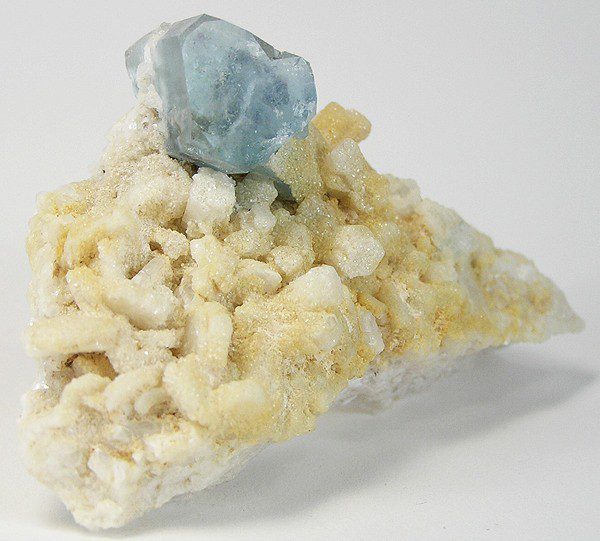
Chunky, doubly terminated gem aquamarine crystal at the edge of its matrix from Mogok, Myanmar.
Photo: Robert M. Lavinsky · CC BY-SA 3.0 · Source

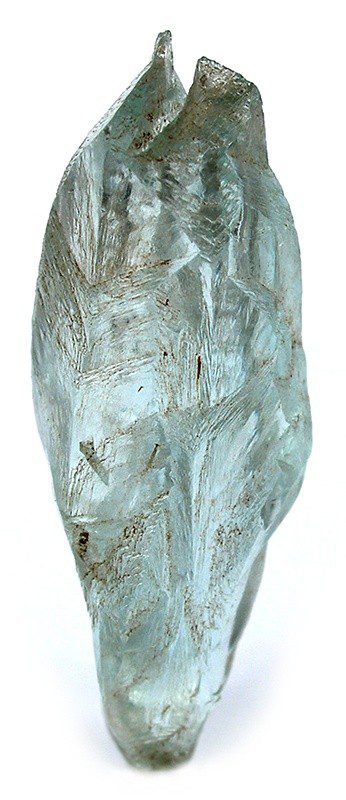
Gem aquamarine floater crystal 4.1 cm long from the La Esperanza Quarry, Dumesnil, Córdoba, Argentina.
Photo: Robert M. Lavinsky · CC BY-SA 3.0 · Source

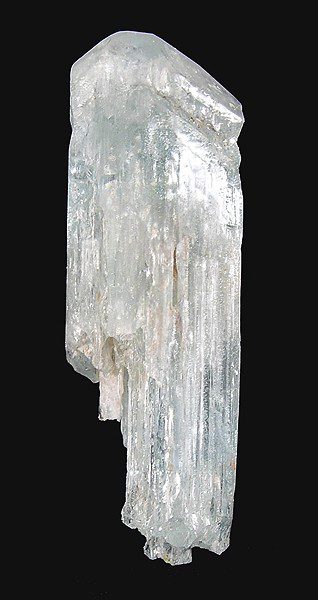
Aquamarine crystal 5.6 cm long with two terminations on the same end from Medina, Minas Gerais, Brazil.
Photo: Robert M. Lavinsky · CC BY-SA 3.0 · Source

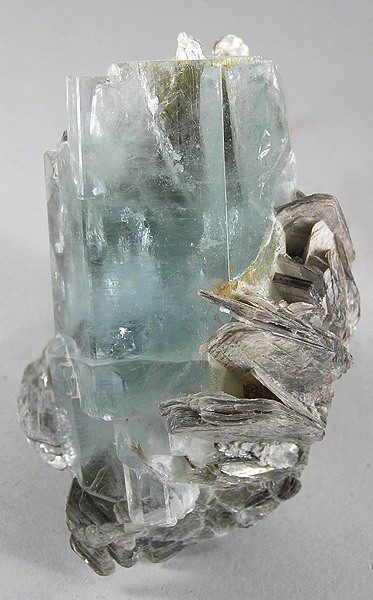
Large, doubly terminated gemmy aquamarine crystal with muscovite, labelled Gilgit, Pakistan.
Photo: Robert M. Lavinsky · CC BY-SA 3.0 · Source

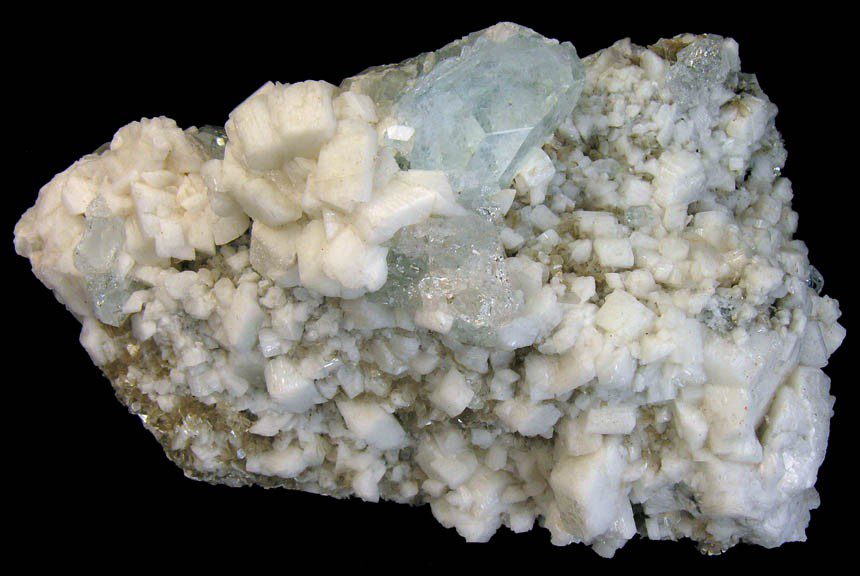
Tabular gem aquamarine crystals on matrix from Mt Xuebaoding, Pingwu County, Sichuan, China.
Photo: Robert M. Lavinsky · CC BY-SA 3.0 · Source

Where Aquamarine is found (45)
Argentina
- La Esperanza Quarry (Dumesnil)Córdoba · 5 photos
Brazil
- Barra de SalinasMinas Gerais · 2 photos
- GalileiaMinas Gerais · 3 photos
- Guaratinga (Jaquetô)Bahia · 4 photos
- Marambaia (Caraí)Minas Gerais · 1 photo
- MedinaMinas Gerais · 5 photos
- Mimoso do SulEspírito Santo · 3 photos
- Padre ParaísoMinas Gerais · 5 photos
- Pedra AzulMinas Gerais · 1 photo
- Teófilo OtoniMinas Gerais · 2 photos
Bulgaria
- Banite (Rhodope Mountains)Smolyan Province · 1 photo
China
- Mt Xuebaoding (Pingwu)Sichuan · 5 photos
Colombia
- Chivor MineBoyacá · 1 photo
Germany
- Tirschenreuth (Upper Palatinate Forest)Bavaria · 1 photo
Kenya
- Meru (Meru County)Meru County (former Eastern Province) · 1 photo
Myanmar
- MogokMandalay Region · 5 photos
Namibia
- Erongo MountainErongo · 5 photos
- Klein SpitzkoppeErongo Region · 1 photo
Nepal
- Ganesh Himal deposit (Somdang)Bagmati · 2 photos
Nigeria
- Jos PlateauPlateau State · 5 photos
Pakistan
- Alchuri (Alchori), Shigar ValleySkardu District · 1 photo
- Arandu (Basha Valley)Skardu District · 1 photo
- Bien (Basha Valley)Skardu District · 1 photo
- Chumar Bakhoor (Sumayar, Nagar)Gilgit District · 2 photos
- Dache (Haramosh-Dassu)Gilgit District · 2 photos
- Dassu (Dusso)Skardu District · 5 photos
- GilgitGilgit District · 5 photos
- Nagar Valley (Nagir)Gilgit District · 5 photos
- Shengus (Shingus)Northern Areas (Baltistan) · 5 photos
- Shigar ValleySkardu District · 5 photos
- SkarduSkardu District · 5 photos
Russia
- Adun-Chelon (Adun-Cholon) massifZabaykalsky Krai · 2 photos
- Miass (Ilmen Mountains)Chelyabinsk Oblast · 1 photo
United States
- Blue Lady Mine (Blue Bell deposit), Chihuahua ValleyCalifornia · 1 photo
- Centerville District (Boise Basin)Idaho · 1 photo
- Mount AnteroColorado · 5 photos
- Mount White (Chaffee County)Colorado · 1 photo
- Pack Rat MineCalifornia · 1 photo
- Reynolds mine (Beryl Hill mine)Massachusetts · 1 photo
- Royalston (Worcester County)Massachusetts · 2 photos
- Sawtooth Mountains (Sawtooth batholith)Idaho · 5 photos
- Stow (Oxford County)Maine · 1 photo
- Strickland Quarry (Collins Hill, Portland)Connecticut · 2 photos
Vietnam
- Lục Yên DistrictYên Bái · 4 photos
- Quỳ Châu DistrictNghệ An · 3 photos
Identity
- Variety of
- Beryl
- Strunz
- 9 Silicates
- IMA status
- Variety
- Elements
- Be, Al, Si, O
Physical properties
- Color
- Pale blue to sky-blue and greenish blue; most often a light pastel greenish blue
- Streak
- White
- Luster
- Vitreous luster
- Transparency
- Variable
- Mohs hardness
- 7.5–8
- Density
- 2.63–2.97 g/cm³
- Cleavage / fracture
- Imperfect cleavage on {0001}; fracture conchoidal to uneven; brittle
Crystallography
- Crystal system
- Hexagonal
- Space group
- P6/mcc
- Typical habit
- Hexagonal prisms with {10-10}, {0001} and {11-20}, sometimes terminated by pyramids; also columnar to granular. Aquamarine often forms large, clean, well-formed crystals
- Twinning
- Rare, on {hkil} forms
- Optical data
- Uniaxial (-); nω = 1.567-1.610, nε = 1.565-1.599, rising with alkali content; pleochroism weak to distinct, with the extraordinary ray sea-green to blue in blue beryl
Formation and use
- Formation
- Like other beryl it forms mainly in granites and granite pegmatites (often in miarolitic cavities), rarely in nepheline syenites, and also in mafic metamorphic rocks, hydrothermal veins and vugs in rhyolite. Typical companions are quartz, feldspar, muscovite, lepidolite, tourmaline, topaz, spodumene, cassiterite and columbite-tantalite.
- Uses
- Gemstone; collector specimens.
- Stability and care
- Most aquamarine sold as gems has been heat-treated to remove the greenish tint and give a purer blue, although some buyers prefer the untreated greenish colour. Colour changes on heating and on irradiation are controlled largely by the iron in the structural channels.
Related minerals
Sources
- SRC-266 · Book
Handbook of Mineralogy - BerylAnthony, J.W.; Bideaux, R.A.; Bladh, K.W.; Nichols, M.C. · 2001 · Mineralogical Society of America / Mineral Data Publishing - SRC-733 · Website
Aquamarine DescriptionGemological Institute of America · GIA - SRC-734 · Website
Aquamarine Quality FactorsGemological Institute of America · GIA - SRC-735 · Article
Channel constituents in berylGoldman, D.S.; Rossman, G.R.; Parkin, K.M. · 1978 · Physics and Chemistry of Minerals 3, 225-235
Draft data from the Provenite workbook. Check entries against the cited sources before relying on them. Photos are open-licence images from Wikimedia Commons; the author and licence are given with each photo.