About Azurite
Cu₃(CO₃)₂(OH)₂
A deep blue copper carbonate hydroxide that forms in the oxidized part of copper deposits, often together with green malachite. Crystals can reach several centimetres and are among the most sought-after blue mineral specimens; it was also the standard blue pigment before ultramarine.
Photos of Azurite
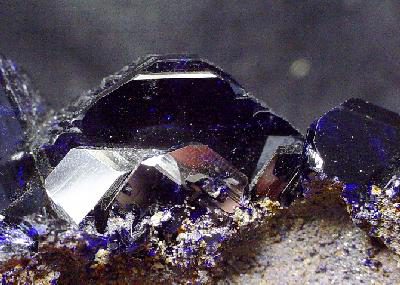
Single tabular azurite crystal on matrix from the Easter pocket, Tsumeb.
Photo: Robert M. Lavinsky · CC BY-SA 3.0 · Source

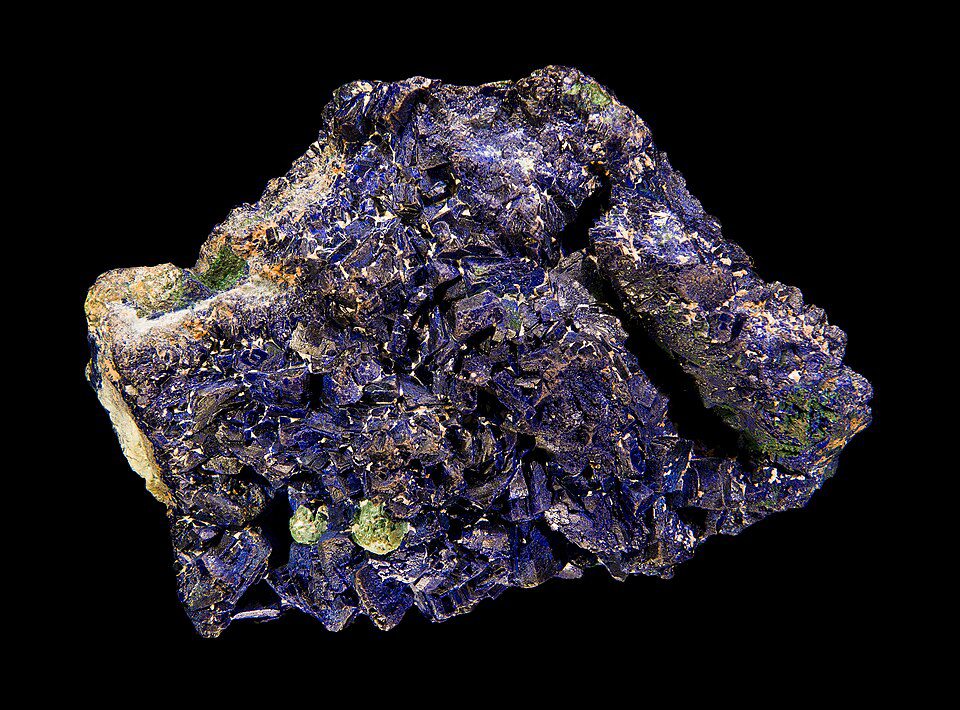
Azurite (chessylite) specimen from Chessy-les-Mines.
Photo: Didier Descouens · CC BY-SA 3.0 · Source

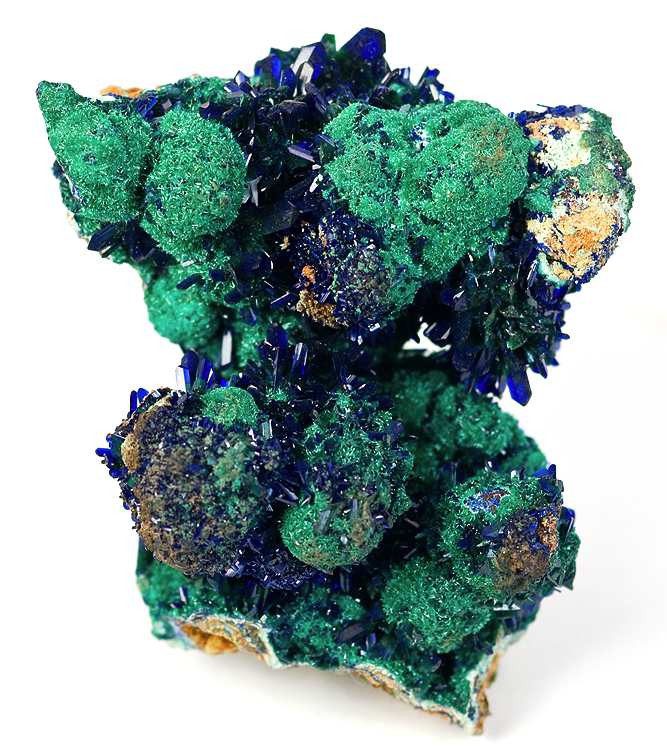
Azure azurite crystals on botryoidal malachite, Concepcion del Oro.
Photo: Robert M. Lavinsky · CC BY-SA 3.0 · Source

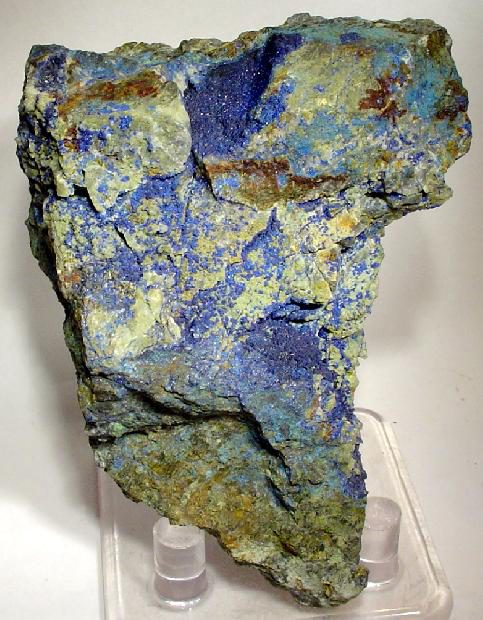
Azurite crystals lining a vug on matrix, Ting Tang Mine, Cornwall.
Photo: Robert M. Lavinsky · CC BY-SA 3.0 · Source

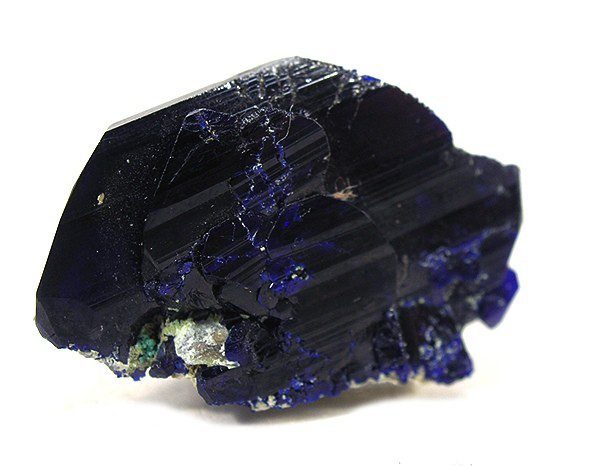
Doubly terminated midnight-blue azurite crystal, Inspiration Mine, Arizona.
Photo: Robert M. Lavinsky · CC BY-SA 3.0 · Source

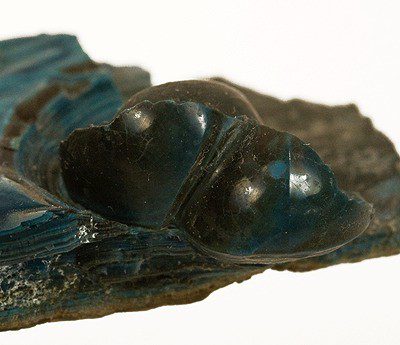
Layered sky-blue scalloped azurite crust with botryoidal eyes, Cole Mine, Bisbee.
Photo: Robert M. Lavinsky · CC BY-SA 3.0 · Source

Where Azurite is found (7)
France
- Chessy-les-MinesRhône · 1 photo
Mexico
- Concepción del OroZacatecas · 1 photo
- Milpillas MineSonora
Namibia
- Tsumeb MineOshikoto Region · 2 photos
United Kingdom
- Ting Tang MineCornwall · 1 photo
United States
- Cole Mine (Cole shaft), BisbeeArizona · 1 photo
- Inspiration MineArizona · 1 photo
Azurite on the same specimen with other minerals
1 specimen photo(s) from this locality show azurite with malachite together. The pairing comes from the photographer's file name and label, so the relationship between the two minerals is not specified.
Identity
- Also called
- chessylite
- Strunz
- 5 Carbonates and nitrates
- IMA status
- Grandfathered
- Name origin
- From the Persian word lazhward, a reference to the characteristic deep blue colour; the name Azurite dates from 1824.
- Elements
- Cu, C, O, H
Physical properties
- Color
- Azure-blue to Berlin blue, very dark to pale blue
- Streak
- Pale blue
- Luster
- Vitreous luster
- Transparency
- Variable
- Mohs hardness
- 3.5–4
- Density
- 3.77–3.78 g/cm³
- Cleavage / fracture
- Cleavage perfect but interrupted on {011}, fair on {100}, poor on {110}; fracture conchoidal; brittle
Crystallography
- Crystal system
- Monoclinic
- Space group
- P2₁/c
- Structure
- Monoclinic carbonate-hydroxide structure; cell a = 5.0109, b = 5.8485, c = 10.345 (angstrom), beta = 92.43 degrees, Z = 2.
- Typical habit
- Very varied (over 100 crystal forms recorded): tabular on {001} or prismatic crystals, rosettes, spherical or lenticular aggregates, radial stalactitic and botryoidal crusts, drusy, earthy and massive
- Twinning
- Rare, on {101}, {102} and {001}
- Optical data
- Biaxial (+); alpha = 1.730, beta = 1.754-1.758, gamma = 1.835-1.838; 2V measured about 67 degrees; strongly pleochroic in shades of blue
Formation and use
- Formation
- Forms in the oxidized (supergene) zone of copper deposits, especially where carbonate-rich rocks or groundwater are present. Typical associates are malachite, chrysocolla, brochantite, cuprite, cerussite, calcite and dolomite. It tends to form in drier, more acidic microenvironments than malachite.
- Uses
- Minor copper ore; historic blue pigment; collector specimens; azurite-malachite is cut as cabochons, inlay and carvings, faceted stones are very rare.
- Stability and care
- Less stable than malachite: in damp air it slowly alters to green malachite, and it can lose colour with heat, light and air exposure. Store in the dark, clean only with water, mild detergent and a soft brush, and avoid acids. Dust is toxic because of its copper content. Natural crystals are generally not treated; azurmalachite may be pore-filled or reconstituted.
Related minerals
- Related minerals
- Malachitechrysocollabrochantitecupritecerussite
- Can be confused with
- Lazuritesodalitelinariteshattuckite
Sources
- SRC-228 · Book
Handbook of Mineralogy - AzuriteAnthony, J.W.; Bideaux, R.A.; Bladh, K.W.; Nichols, M.C. · 2005 · Mineralogical Society of America - SRC-230 · Website
Azurite - Open Mineral EncyclopediaMineralogical Association (Open Mineral Encyclopedia) · mineralogist.org - SRC-231 · Website
Azurite Value, Price, and Jewelry InformationInternational Gem Society · gemsociety.org
Draft data from the Provenite workbook. Check entries against the cited sources before relying on them. Photos are open-licence images from Wikimedia Commons; the author and licence are given with each photo.