About Malachite
Cu₂(CO₃)(OH)₂
A green copper carbonate hydroxide, commonly banded in massive material and fibrous or botryoidal in form.
Photos of Malachite
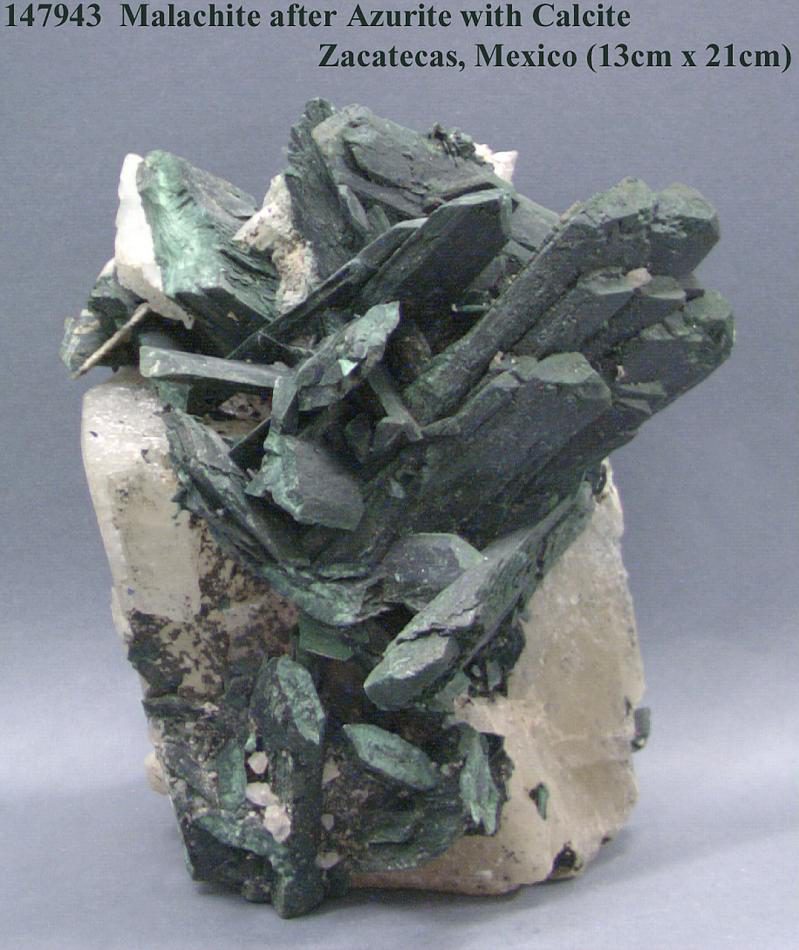
Malachite specimen from Canoas, Zacatecas, Mexico, from the Smithsonian collection.
Photo: Smithsonian National Museum of Natural History · CC0 · Source
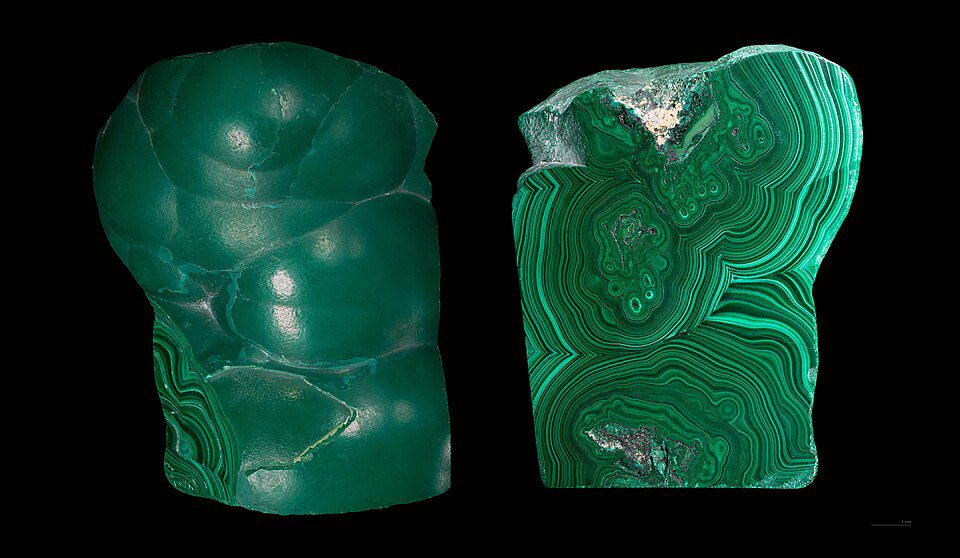
One malachite specimen shown raw on one side and polished on the other, from the Katanga Copper Crescent.
Photo: Didier Descouens · CC BY-SA 3.0 · Source

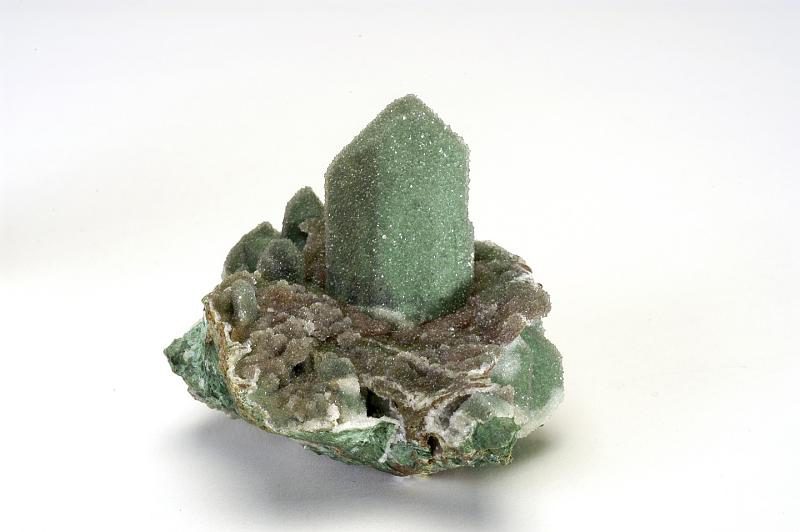
Malachite specimen from Tsumeb, Namibia, photographed for the Smithsonian collection.
Photo: Smithsonian National Museum of Natural History · CC0 · Source
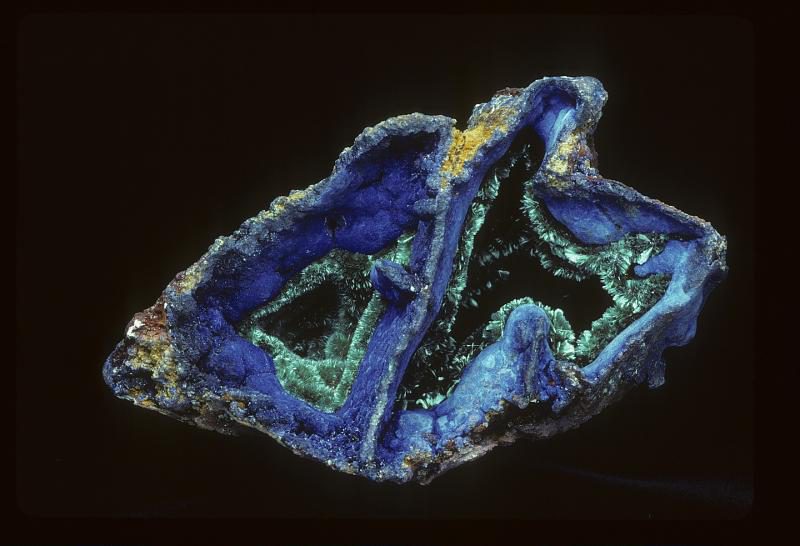
Malachite specimen from Bisbee, Cochise County, Arizona, from the Smithsonian collection.
Photo: Smithsonian National Museum of Natural History · CC0 · Source
Where Malachite is found (5)
Democratic Republic of the Congo
- Kolwezi area (Musonoi mine)Katanga · 1 photo
Mexico
- CanoasZacatecas · 1 photo
- Concepción del OroZacatecas
Namibia
- Tsumeb MineOshikoto Region · 1 photo
United States
- Bisbee (Warren Mining District)Arizona · 1 photo
Malachite on the same specimen with other minerals
Same specimen Malachite with Azurite at Concepción del Oro
1 specimen photo(s) from this locality show azurite with malachite together. The pairing comes from the photographer's file name and label, so the relationship between the two minerals is not specified.
Identity
- Strunz
- 5 Carbonates and nitrates
- Name origin
- From the Greek word for mallow, alluding to its green color.
- Elements
- Cu, C, O, H
Physical properties
- Color
- Bright, dark or blackish green; commonly banded in masses; green to yellowish green in transmitted light
- Streak
- Pale green
- Luster
- Adamantine luster
- Transparency
- Variable
- Mohs hardness
- 3.5–4
- Density
- 3.983–4.05 g/cm³
- Cleavage / fracture
- Cleavage {201} perfect, {010} fair; fracture subconchoidal to uneven
Crystallography
- Crystal system
- Monoclinic
- Space group
- P2₁/a
- Typical habit
- Acicular to prismatic, thick tabular or equant crystals; typically stalactitic, mammillary or botryoidal masses that are radially fibrous inside; sprays and crude aggregates up to 9 cm
- Twinning
- On {100} and {201}; very common as contact or penetration twins, also polysynthetic
- Optical data
- Biaxial (-); alpha 1.655, beta 1.875, gamma 1.909; 2V 43 degrees; pleochroism X nearly colorless, Y yellowish green, Z deep green
Formation and use
- Formation
- A common secondary mineral formed in the oxidation zone of copper deposits.
- Uses
- Locally an ore of copper.
Related minerals
- Related minerals
- Azuritecupritecerussitechrysocolla (associated minerals)
Sources
- SRC-213 · Book
Handbook of Mineralogy - MalachiteAnthony, J.W.; Bideaux, R.A.; Bladh, K.W.; Nichols, M.C. · 2005 · Mineralogical Society of America
Draft data from the Provenite workbook. Check entries against the cited sources before relying on them. Photos are open-licence images from Wikimedia Commons; the author and licence are given with each photo.