About Barite
BaSO₄
The most common barium mineral, recognizable by its high density for a light-colored nonmetallic mineral and by tabular or rosette-forming crystals.
Photos of Barite
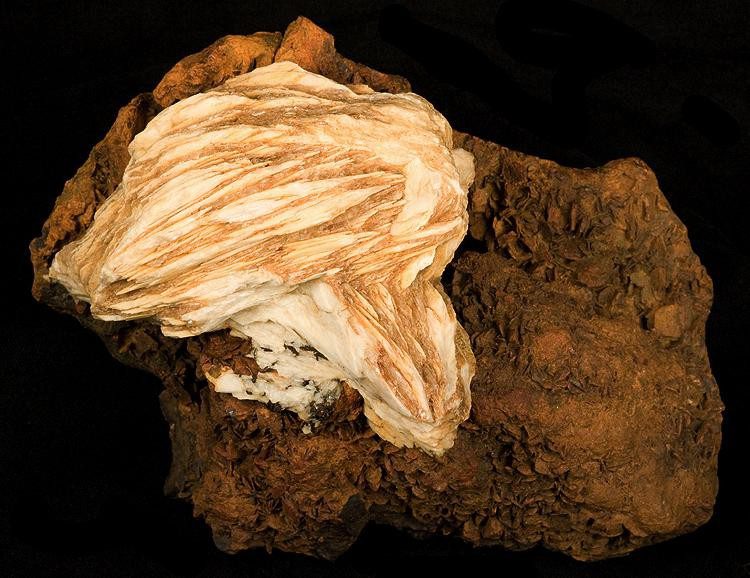
Two bladed baryte rosettes on a gossan matrix, an old specimen from the Palmer mines in Missouri.
Photo: Robert M. Lavinsky · CC BY-SA 3.0 · Source

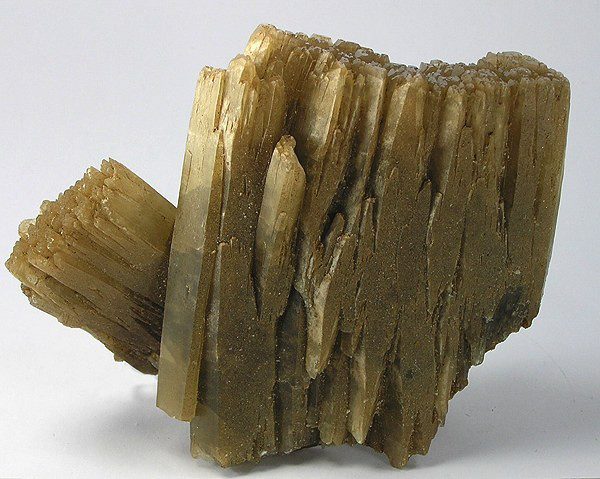
A pair of glassy baryte crystals with stepped terminations from the Mowbray Mine, Cumbria.
Photo: Robert M. Lavinsky · CC BY-SA 3.0 · Source

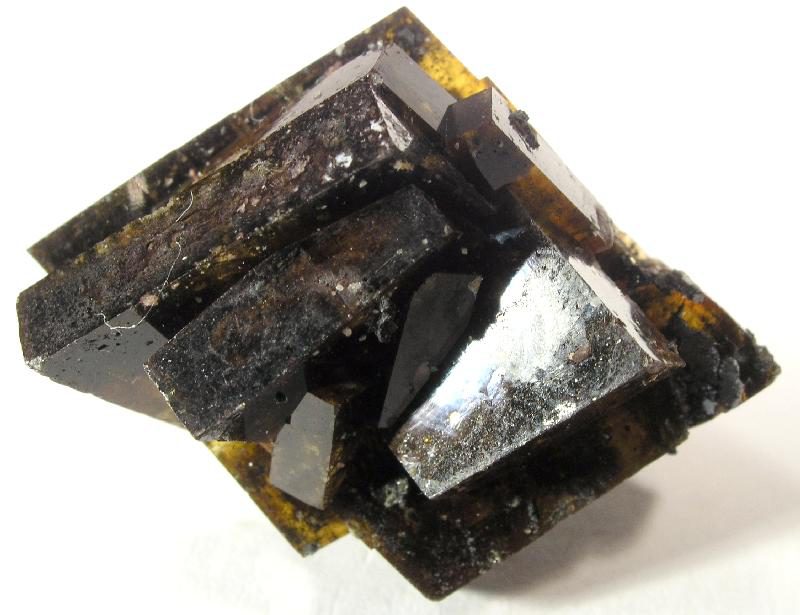
A compact cluster of brown intergrown baryte blades from the Magma Mine at Superior, Arizona.
Photo: Robert M. Lavinsky · CC BY-SA 3.0 · Source

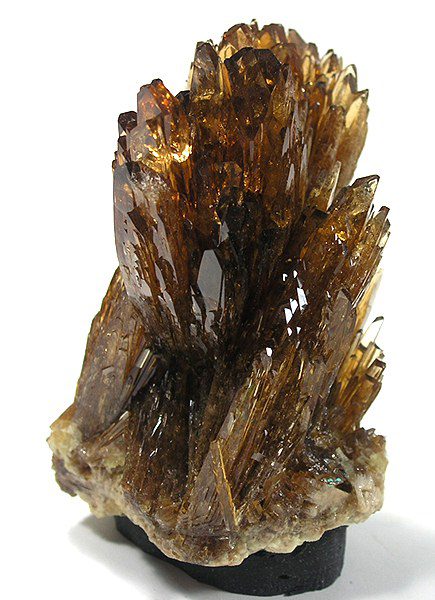
A cluster of lustrous amber baryte crystals from the sulphur-mining area near Tarnobrzeg, Poland.
Photo: Robert M. Lavinsky · CC BY-SA 3.0 · Source

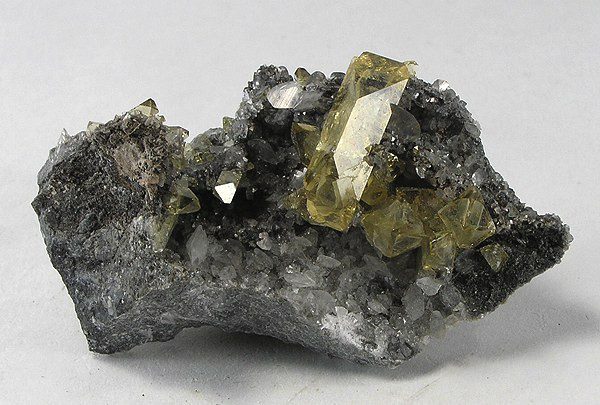
A glassy golden baryte crystal with smaller crystals from the Tongren Mine in Guizhou.
Photo: Robert M. Lavinsky · CC BY-SA 3.0 · Source

Where Barite is found (5)
China
- Tongren MineGuizhou · 1 photo
Poland
- Machow Mine, TarnobrzegSubcarpathian Voivodeship · 1 photo
United Kingdom
- Mowbray MineEngland · 1 photo
United States
- Magma Mine, SuperiorArizona · 1 photo
- Palmer mines (Fourche a Courtois), Washington CountyMissouri · 1 photo
Barite on the same specimen with other minerals
1 specimen photo(s) from this locality show marcasite with barite together. The pairing comes from the photographer's file name and label, so the relationship between the two minerals is not specified.
1 specimen photo(s) from this locality show siderite with barite together. The pairing comes from the photographer's file name and label, so the relationship between the two minerals is not specified.
Identity
- Also called
- Baryte
- Group
- Barite Group
- Strunz
- 7.AD.35 · 7 Sulfates (incl. chromates, molybdates, tungstates)
- IMA status
- Grandfathered
- Name origin
- From the Greek word for weight, referring to its high specific gravity.
- Elements
- Ba, S, O
Physical properties
- Color
- Colorless, white, yellow, brown, gray, pale red, green or blue; may be zoned or change color on light exposure
- Streak
- White
- Luster
- Vitreous luster
- Transparency
- Variable
- Mohs hardness
- 3–3.5
- Density
- 4.47–4.5 g/cm³
- Cleavage / fracture
- Cleavage {001} perfect, {210} less perfect, {010} imperfect; fracture uneven; brittle
- Magnetism / fluorescence
- May be thermoluminescent; fluoresces and phosphoresces cream to spectral colors under UV
Crystallography
- Crystal system
- Orthorhombic
- Space group
- Pnma
- Typical habit
- Thin to thick tabular crystals, prismatic or equant; also crested or rosette-like aggregates, concretionary, fibrous, nodular, stalactitic, banded, granular, earthy or massive
- Optical data
- Biaxial (+); alpha 1.636, beta 1.637, gamma 1.648; 2V 36-40 degrees; weak pleochroism; colorless or faintly tinted in transmitted light
Formation and use
- Formation
- Gangue mineral in low-temperature hydrothermal veins; residual deposits from weathered barite-bearing limestones; accessory in igneous rocks and carbonatites; component of submarine volcanogenic massive sulfide deposits and sea-floor chimneys.
Related minerals
- Related minerals
- Celestine (forms a series with barite)anglesite (barite group)
Sources
- SRC-212 · Book
Handbook of Mineralogy - BariteAnthony, J.W.; Bideaux, R.A.; Bladh, K.W.; Nichols, M.C. · 2005 · Mineralogical Society of America - SRC-214 · Database
Barite Mineral DataBarthelmy, D. · Webmineral
Draft data from the Provenite workbook. Check entries against the cited sources before relying on them. Photos are open-licence images from Wikimedia Commons; the author and licence are given with each photo.