About Marcasite
FeS₂
The orthorhombic polymorph of FeS2, recognizable by bladed or tabular crystals, repeated spearhead twins and radiating or nodular aggregates.
Photos of Marcasite
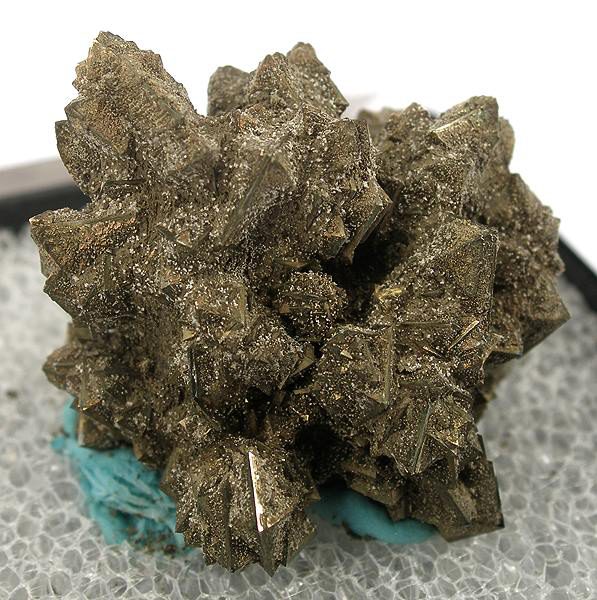
A loose, complete cluster of marcasite crystals from the chalk cliffs at Cap Blanc-Nez, about 3 cm across.
Photo: Robert M. Lavinsky · CC BY-SA 3.0 · Source

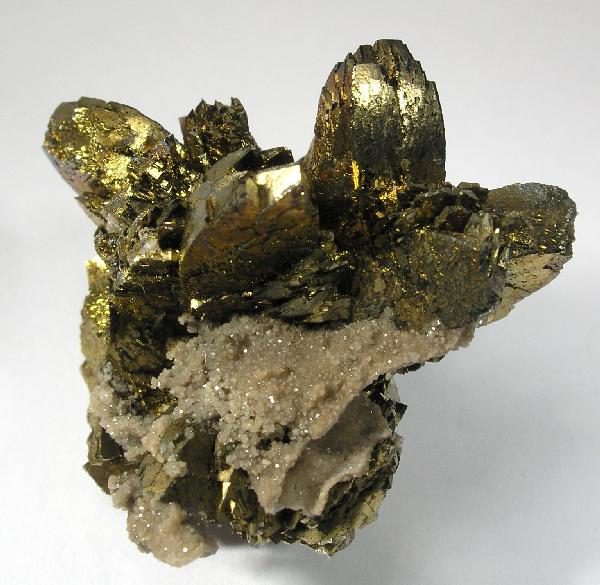
Brassy tabular marcasite crystals with picket-fence terminations on drusy quartz from Flamboro Quarry.
Photo: Robert M. Lavinsky · CC BY-SA 3.0 · Source

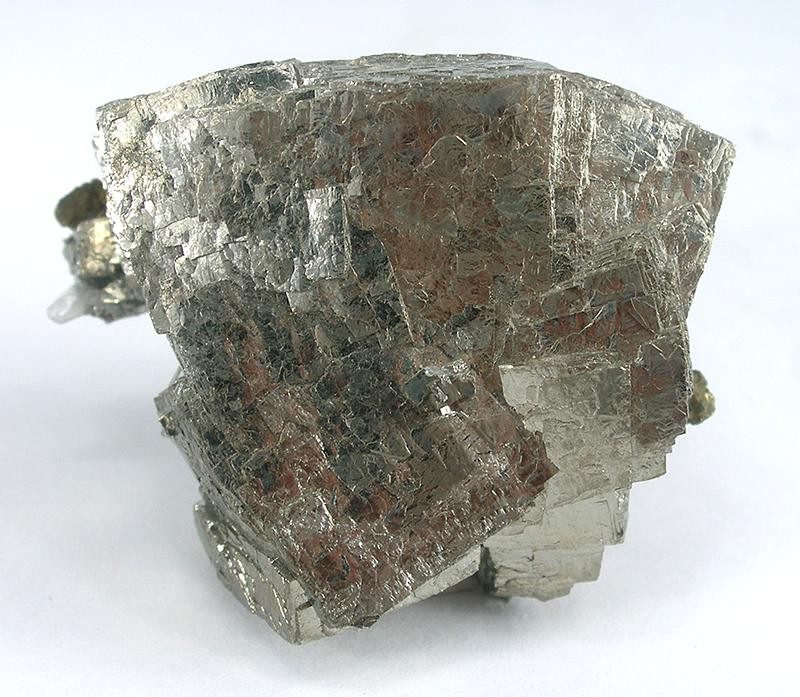
A complete-all-around miniature marcasite specimen from the Ashio mine, about 4.5 cm across.
Photo: Robert M. Lavinsky · CC BY-SA 3.0 · Source

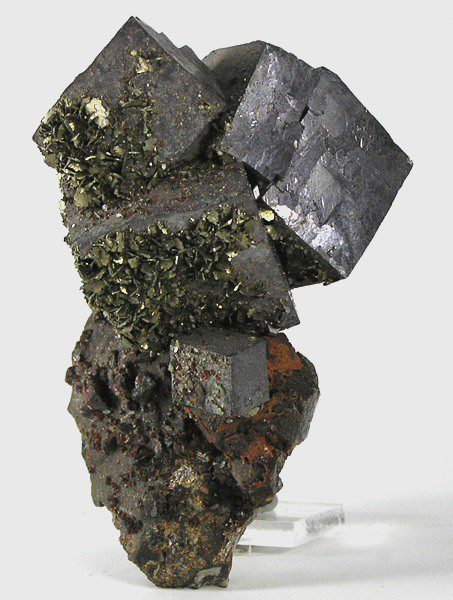
Bladed marcasite crystals attached to a cluster of galena cubes with sphalerite from the Joplin Field.
Photo: Robert M. Lavinsky · CC BY-SA 3.0 · Source

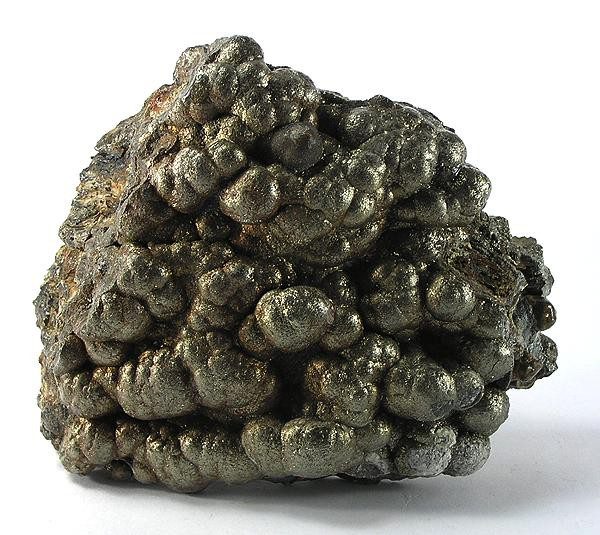
A large mass of golden botryoidal marcasite from Olkusz, about 14 cm long.
Photo: Robert M. Lavinsky · CC BY-SA 3.0 · Source

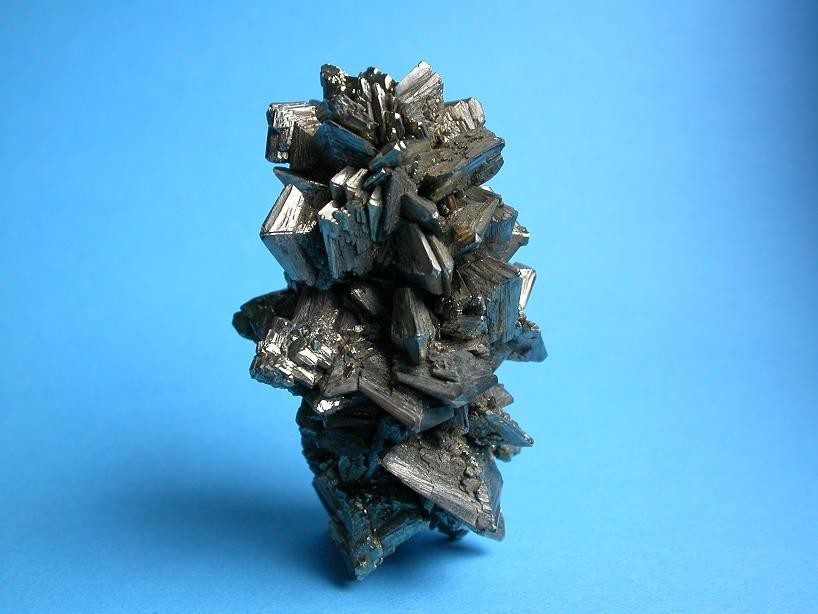
A marcasite crystal cluster about 8 cm across from Vintirov.
Photo: Leon Hupperichs · CC BY-SA 3.0 · Source

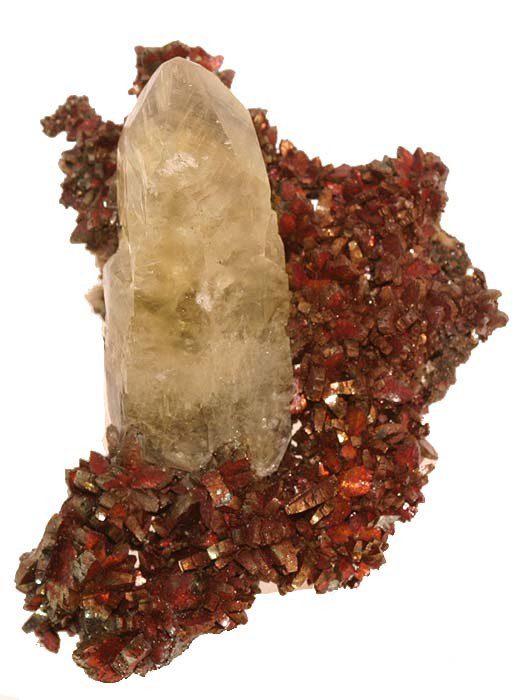
A golden calcite crystal on a plate of iridescent marcasite crystals from the Sweetwater Mine.
Photo: Robert M. Lavinsky · CC BY-SA 3.0 · Source

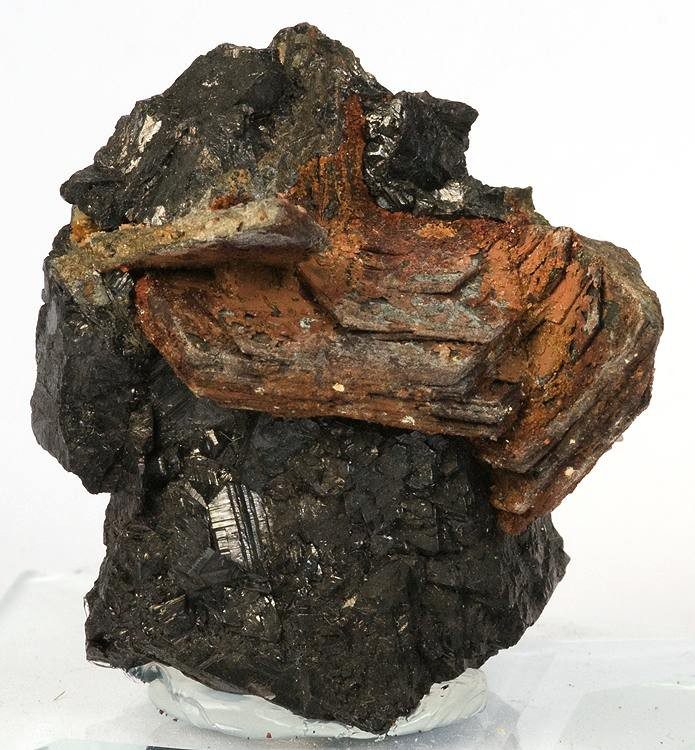
Rust-brown marcasite pseudomorphs after tabular pyrrhotite crystals with sphalerite from the Herja Mine.
Photo: Robert M. Lavinsky · CC BY-SA 3.0 · Source

Where Marcasite is found (16)
Bolivia
- Siglo Veinte MinePotosi
Canada
- Flamboro QuarryOntario · 3 photos
Czech Republic
- VintirovKarlovy Vary Region · 2 photos
France
- Cap Blanc-NezPas-de-Calais · 3 photos
- Trept QuarryIsere
Japan
- Ashio MineTochigi Prefecture · 3 photos
Kosovo
- Trepca complexMitrovica District · 1 photo
Namibia
- Tsumeb MineOshikoto Region
Poland
- Olkusz ore districtLesser Poland Voivodeship · 3 photos
Romania
- CavnicMaramures County · 1 photo
- Herja MineMaramures County · 2 photos
United Kingdom
- FolkestoneKent
United States
- Annabel Lee MineIllinois
- Joplin FieldMissouri · 3 photos
- Magmont MineMissouri · 1 photo
- Sweetwater MineMissouri · 2 photos
Marcasite on the same specimen with other minerals
Joplin marcasite is described as bladed brassy crystals, sometimes arranged in parallel orientation on grey galena cubes or octahedra; marcasite also lines corrosion cavities in galena.
The pale brassy blades against dark lead-grey galena is a classic Tri-State look and shows an oriented growth relationship.
Sources: SRC-015
The same Joplin description lists quartz among the surfaces on which the bladed marcasite crystals sit, next to galena, sphalerite, calcite, chert and jasperoid.
Glittering marcasite on clear or milky quartz is a sought-after contrast of sulfide and silicate.
Sources: SRC-015
A Siglo XX specimen from the Contacto vein carries sharp, water-clear prismatic quartz crystals with small golden marcasite clusters (to about 6 mm) on the same piece, together with a tan siderite coating.
Clear quartz prisms set off by golden sulfide clusters from a classic Bolivian tin-district locality.
Sources: SRC-154
2 specimen photo(s) from this locality show marcasite with sphalerite together. The pairing comes from the photographer's file name and label, so the relationship between the two minerals is not specified.
2 specimen photo(s) from this locality show marcasite with sphalerite together. The pairing comes from the photographer's file name and label, so the relationship between the two minerals is not specified.
1 specimen photo(s) from this locality show marcasite with barite together. The pairing comes from the photographer's file name and label, so the relationship between the two minerals is not specified.
1 specimen photo(s) from this locality show marcasite with calcite together. The pairing comes from the photographer's file name and label, so the relationship between the two minerals is not specified.
1 specimen photo(s) from this locality show marcasite with galena together. The pairing comes from the photographer's file name and label, so the relationship between the two minerals is not specified.
1 specimen photo(s) from this locality show marcasite with sphalerite together. The pairing comes from the photographer's file name and label, so the relationship between the two minerals is not specified.
1 specimen photo(s) from this locality show marcasite with calcite together. The pairing comes from the photographer's file name and label, so the relationship between the two minerals is not specified.
1 specimen photo(s) from this locality show marcasite with chalcopyrite together. The pairing comes from the photographer's file name and label, so the relationship between the two minerals is not specified.
1 specimen photo(s) from this locality show marcasite with quartz together. The pairing comes from the photographer's file name and label, so the relationship between the two minerals is not specified.
1 specimen photo(s) from this locality show galena with marcasite together. The pairing comes from the photographer's file name and label, so the relationship between the two minerals is not specified.
2 specimen photo(s) from this locality show marcasite with pyrrhotite together. The pairing comes from the photographer's file name and label, so the relationship between the two minerals is not specified.
Identity
- Also called
- white iron pyrite
- Group
- Marcasite Group
- Strunz
- 2.EB.10a · 2 Sulfides and sulfosalts
- IMA status
- Grandfathered
- Name origin
- Name of Arabic or Moorish origin, historically applied broadly to pyrite-like metallic minerals; the modern species definition dates from the nineteenth century.
- Elements
- Fe, S
Physical properties
- Color
- Tin-white on fresh surfaces to pale bronze-yellow; darkens and may tarnish iridescent
- Streak
- Grayish to brownish black
- Luster
- Metallic to submetallic
- Transparency
- Opaque
- Mohs hardness
- 6–6.5
- Density
- 4.875–4.887 g/cm³
- Cleavage / fracture
- Cleavage rather distinct on {101}, traces on {110}; fracture uneven; brittle
- Magnetism / fluorescence
- Non-magnetic; no fluorescence reported
Crystallography
- Crystal system
- Orthorhombic
- Space group
- Pnnm
- Structure
- Orthorhombic FeS2 structure containing S-S disulfide pairs, distinct from cubic pyrite
- Typical habit
- Tabular, pyramidal or prismatic crystals; curved faces; cockscomb and spearhead aggregates; stalactitic, reniform, radiating, nodular and massive forms
- Twinning
- Common repeated twinning on {101}; less common on {011}; repeated twins form cockscomb, spearhead and pseudo-fivefold aggregates
- Optical data
- Opaque; strong reflection pleochroism and very strong anisotropy in reflected light, from yellow through pale green to dark green
Formation and use
- Formation
- Forms mainly under low-temperature, highly acidic conditions in sedimentary rocks such as shale, limestone, chalk and low-rank coal, and in low-temperature hydrothermal veins.
- Uses
- Collector mineral and mineralogical indicator of low-temperature acidic conditions. So-called marcasite jewelry generally uses faceted pyrite rather than true marcasite because true marcasite is brittle and less stable.
- Stability and care
- More prone to oxidation and disintegration than well-crystallized pyrite. Store very dry at low relative humidity, isolated from vulnerable specimens and paper labels; monitor for sulfurous odor, powdery sulfate efflorescence, cracking or crumbling.
Related minerals
- Related minerals
- Pyritepyrrhotitegalenasphaleritefluoritedolomitecalcite
- Polymorphs
- Pyrite
- Can be confused with
- Pyritetarnished pyriteradiating pyrite concretions
Sources
- SRC-013 · Book
Handbook of Mineralogy - MarcasiteAnthony, J.W.; Bideaux, R.A.; Bladh, K.W.; Nichols, M.C. · Mineralogical Society of America - SRC-014 · Database
Marcasite: mineral information, data and localitiesMindat.org · Mindat.org
Draft data from the Provenite workbook. Check entries against the cited sources before relying on them. Photos are open-licence images from Wikimedia Commons; the author and licence are given with each photo.