About Hematite
Fe₂O₃
The most important ore of iron and one of the most widespread iron oxides, hematite forms steel-gray, mirror-bright crystals and plates as well as red earthy and botryoidal masses. Its cherry-red streak separates it from similar dark minerals.
Photos of Hematite
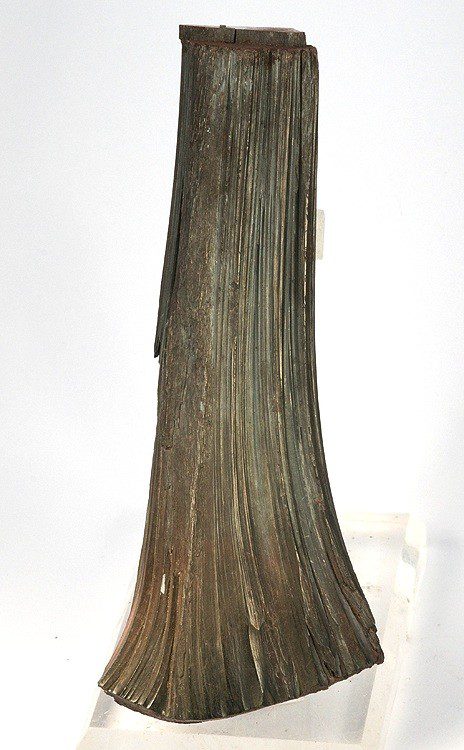
Double-terminated ribbed hematite 'fan' from the Montreal Mine, Wisconsin.
Photo: Robert M. Lavinsky · CC BY-SA 3.0 · Source

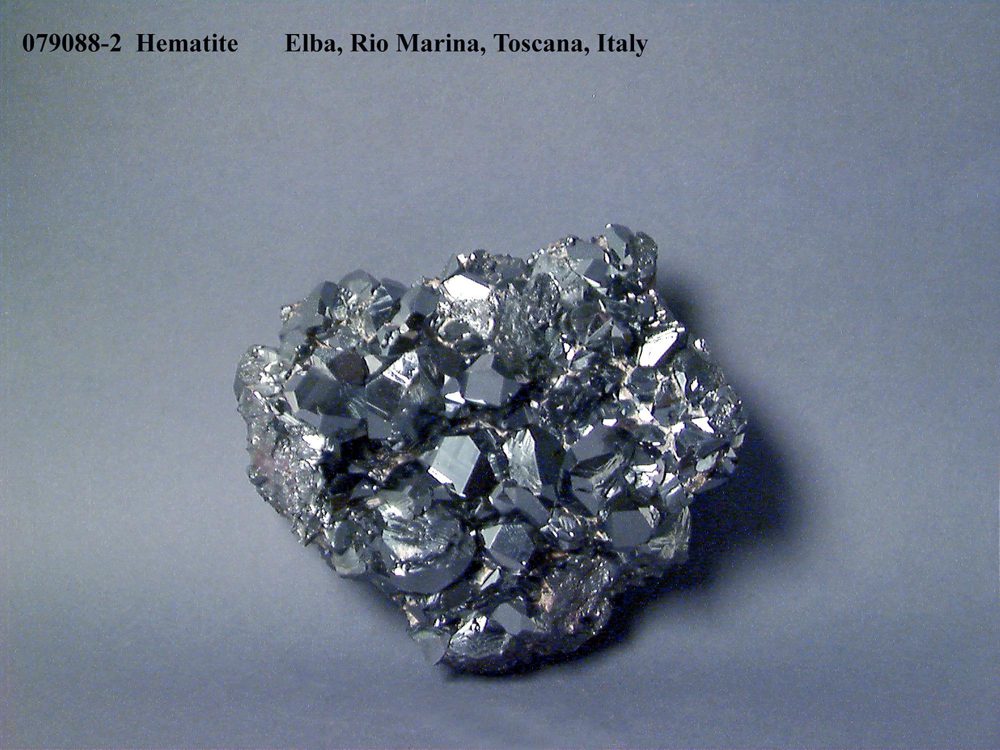
Hematite specimen from Rio Marina, Elba, Italy (NMNH 79088-02).
Photo: Smithsonian NMNH, Department of Mineral Sciences · CC0 · Source
Where Hematite is found (4)
Brazil
- Miguel Burnier (Ouro Preto)Minas Gerais
Italy
- Rio MarinaElba · 1 photo
United Kingdom
United States
- Montreal Mine (Gogebic Range)Wisconsin · 1 photo
Hematite on the same specimen with other minerals
2 specimen photo(s) from this locality show quartz with hematite together. The pairing comes from the photographer's file name and label, so the relationship between the two minerals is not specified.
1 specimen photo(s) from this locality show quartz with hematite together. The pairing comes from the photographer's file name and label, so the relationship between the two minerals is not specified.
1 specimen photo(s) from this locality show dolomite with hematite together. The pairing comes from the photographer's file name and label, so the relationship between the two minerals is not specified.
1 specimen photo(s) from this locality show dolomite with hematite together. The pairing comes from the photographer's file name and label, so the relationship between the two minerals is not specified.
Identity
- Also called
- haematite; specularite (specular hematite); kidney ore; iron rose
- Group
- Hematite group
- Strunz
- 4.CB.05 · 4 Oxides and hydroxides
- Name origin
- From the Greek haima, 'blood', alluding to the red colour of powdered or earthy material.
- Elements
- Fe, O
Physical properties
- Color
- Steel-gray, sometimes with iridescent tarnish; dull to bright red
- Streak
- Cherry-red to reddish brown
- Luster
- Metallic luster
- Transparency
- Opaque
- Mohs hardness
- 5–6
- Density
- 5.255–5.26 g/cm³
- Cleavage / fracture
- No true cleavage; parting on {0001} and {10-11}; fracture uneven to subconchoidal; brittle
- Magnetism / fluorescence
- Only very weakly magnetic (weak ferromagnet/canted antiferromagnet) and not noticeably attracted by an ordinary magnet
Crystallography
- Crystal system
- Trigonal
- Space group
- R-3c
- Structure
- Corundum-type structure of Fe3+ and O; hexagonal cell a = 5.038, c = 13.772 (angstrom), Z = 6.
- Typical habit
- Rhombohedral, pseudocubic or prismatic crystals, thin tabular plates and rosettes ('iron roses'); also radiating fibrous, reniform and botryoidal ('kidney ore'), micaceous (specularite), earthy, oolitic and massive
- Twinning
- Penetration twins on {0001} or with {10-10} as composition plane; lamellar twinning on {10-11}
- Optical data
- Uniaxial (-); omega = 3.15-3.22, epsilon = 2.87-2.94; pleochroic (brownish red / yellowish red) in thin edges; strong internal reflections blood-red
Formation and use
- Formation
- Accessory in felsic igneous rocks, as sublimate in volcanic rocks, in high-temperature hydrothermal veins, in contact-metamorphic deposits and metamorphosed banded iron formations; also a common cement and constituent of sedimentary iron formations and an alteration product of other iron minerals. Associated with ilmenite, rutile and magnetite, and with goethite, siderite and lepidocrocite.
- Uses
- Principal iron ore; red, purple and brown iron-oxide pigments; beads, carvings and jewellery; radiation shielding and ballast.
- Stability and care
- Hard but brittle; protect bright metallic crystal faces from scratching and store specimens separately.
Related minerals
- Related minerals
- Magnetiteilmenitegoethite
- Polymorphs
- Maghemite
- Can be confused with
- Magnetitegoethiteilmenite
Sources
- SRC-229 · Book
Handbook of Mineralogy - HematiteAnthony, J.W.; Bideaux, R.A.; Bladh, K.W.; Nichols, M.C. · 2005 · Mineralogical Society of America - SRC-232 · Website
HematiteWikipedia contributors · Wikipedia
Draft data from the Provenite workbook. Check entries against the cited sources before relying on them. Photos are open-licence images from Wikimedia Commons; the author and licence are given with each photo.