About Quartz
SiO₂
One of the most abundant minerals of the Earth's crust, quartz is the pure silica framework mineral and occurs as colorless prismatic crystals as well as in a wide range of colored varieties. It is piezoelectric and has a Mohs hardness of 7, which makes it a reference point on the hardness scale.
Photos of Quartz
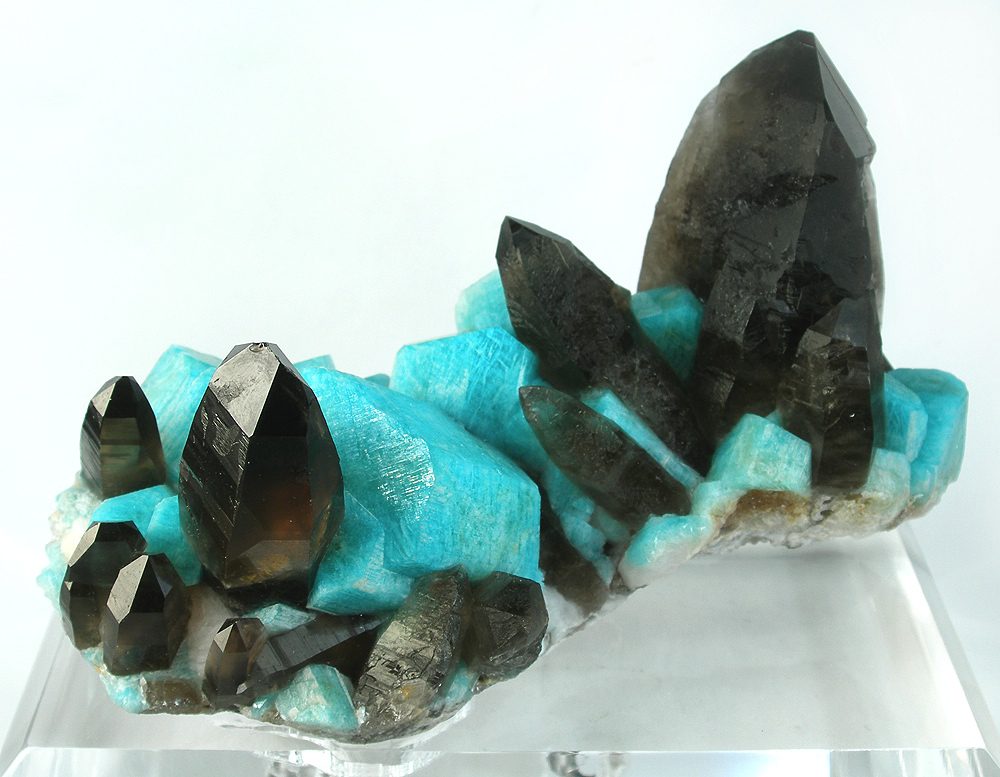
Cabinet-size smoky quartz crystals on green amazonite (specimen from Florissant area, Teller County, Colorado, USA).
Photo: Robert M. Lavinsky · CC BY-SA 3.0 · Source

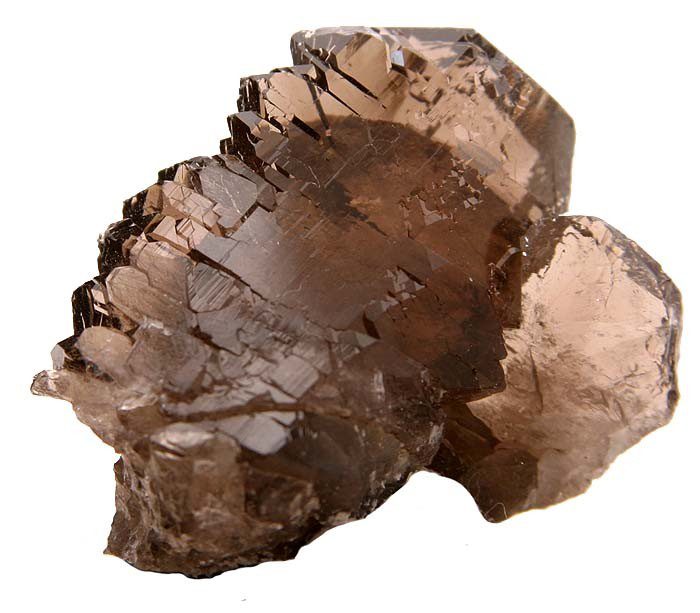
Twisted smoky quartz crystal (gwindel) with a serrated edge (specimen from Graubünden, Switzerland).
Photo: Robert M. Lavinsky · CC BY-SA 3.0 · Source

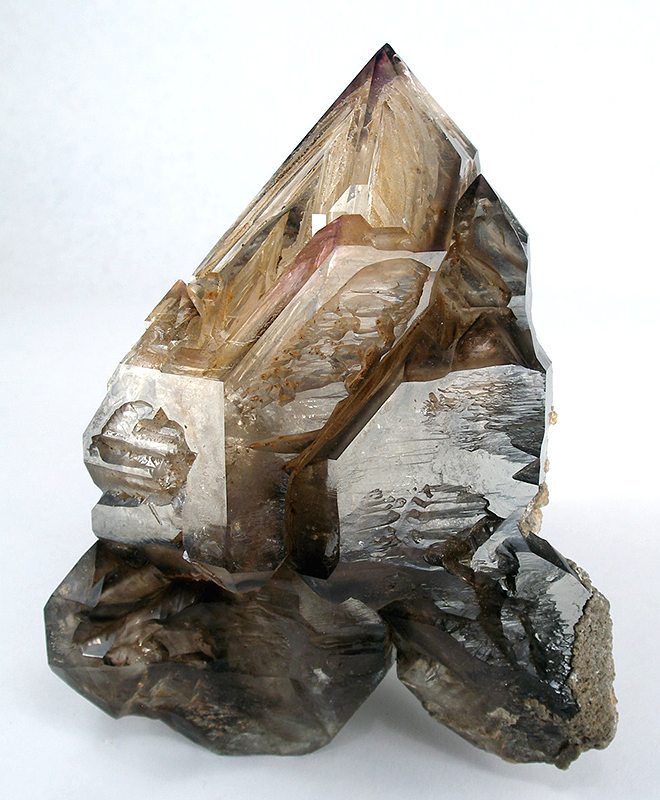
Solid smoky quartz specimen with sceptred, hoppered skeletal growth.
Photo: Robert M. Lavinsky · CC BY-SA 3.0 · Source

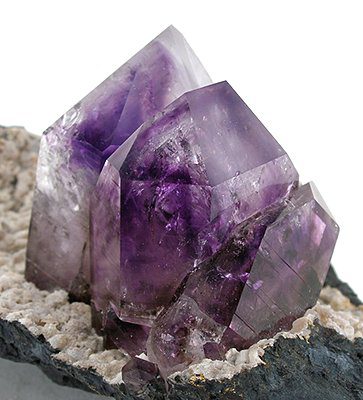
Amethyst crystals up to 4.5 cm in a calcite-lined cavity on matrix.
Photo: Robert M. Lavinsky · CC BY-SA 3.0 · Source

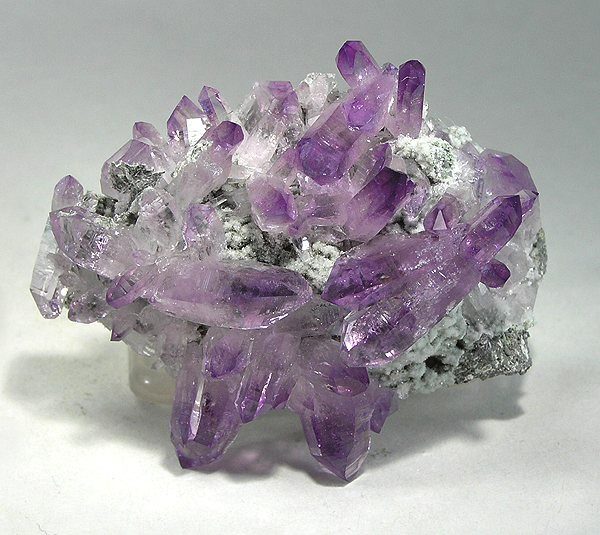
Amethyst crystals lying across a rounded matrix, many with both ends developed, from Piedra Parada, Veracruz, Mexico.
Photo: Robert M. Lavinsky · CC BY-SA 3.0 · Source

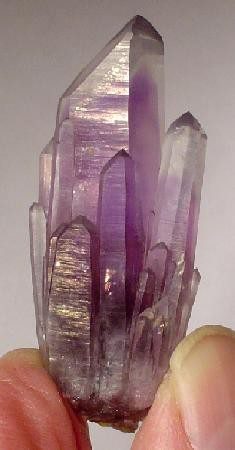
Small cluster of amethyst crystals with colour zoning, about 5 cm, from Amatitlan, Guerrero, Mexico.
Photo: Robert M. Lavinsky · CC BY-SA 3.0 · Source

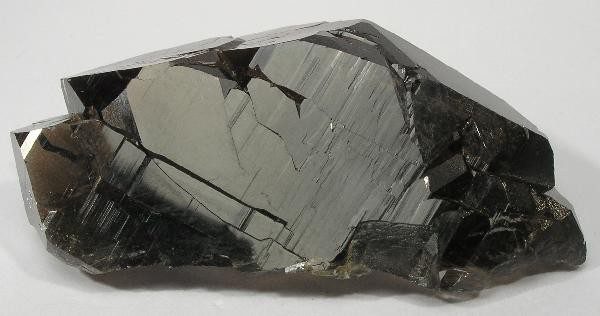
Lustrous pair of smoky quartz crystals, labelled Giuv Valley.
Photo: Robert M. Lavinsky · CC BY-SA 3.0 · Source

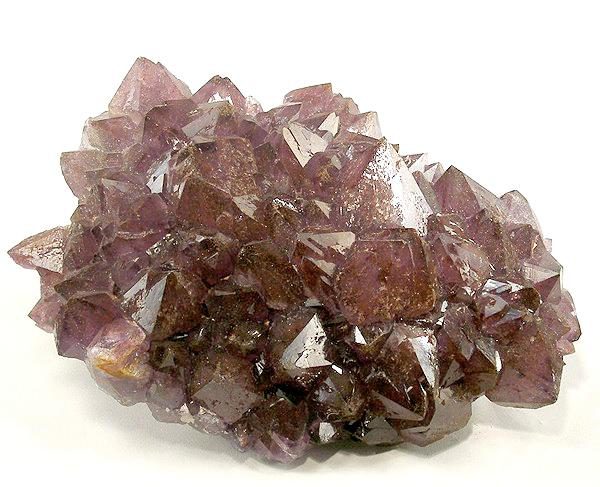
Cabinet specimen of glassy purple amethyst crystals, the largest 3.1 cm across, from the Diamond Willow Mine near Pearl, Ontario.
Photo: Robert M. Lavinsky · CC BY-SA 3.0 · Source

Where Quartz is found (65)
Afghanistan
- Darra-i-Pech pegmatite fieldNangarhar · 1 photo
Argentina
- PapachacraCatamarca · 3 photos
Bolivia
- Anahi MineSanta Cruz · 6 photos
- Siglo Veinte MinePotosi
Brazil
- Ametista do SulRio Grande do Sul
- AraçuaíMinas Gerais · 3 photos
- Berilo Branco claimMinas Gerais · 3 photos
- Conselheiro PenaMinas Gerais
- GalileiaMinas Gerais
- Ilha claim (Lavra da Ilha)Minas Gerais · 3 photos
- Junco do SeridoParaiba
- Minas GeraisMinas Gerais · 1 photo
- Serra dos CristaisGoiás
Bulgaria
- Madan ore fieldSmolyan Province
Canada
- Diamond Willow Mine (Pearl Station)Ontario · 3 photos
- Rose Quartz Pit (Quadeville West Mine / Rose Quartz Quarry)Ontario
- Thunder Bay Amethyst Panorama (Amethyst Mine)Ontario
China
France
- La Gardette mineIsère
Greenland
- IgalikuKujalleq
Hungary
- Gyöngyösoroszi (Altáró)Heves County
Italy
- Capurru Quarry (Osilo)Sardinia · 3 photos
- Torano quarriesTuscany
Kosovo
- Trepca complexMitrovica District
Madagascar
- Antoby QuarryAmoron'i Mania
- Madagascar · 1 photo
- Vohibola pegmatites (Mangarano, Antsirabe II)Vakinankaratra
Mexico
- Amatitlan amethyst veins (Eduardo Neri)Guerrero · 3 photos
- CharcasSan Luis Potosí · 3 photos
- NaicaChihuahua
- Piedra Parada (Tatatila)Veracruz · 3 photos
Namibia
- Erongo MountainErongo · 3 photos
- Goboboseb MountainsErongo · 10 photos
- Tsumeb MineOshikoto Region
Peru
- HuanzalaAncash
Romania
- CavnicMaramures County
Russia
- Bor Pit (Dal'negorsk B deposit)Primorsky Krai · 3 photos
South Africa
- Boekenhoutshoek (Boekenhouthoek)Mpumalanga · 3 photos
Spain
- VillasbuenasSalamanca
Switzerland
- Gletschhorn smoky quartz cleftUri
- GraubündenGraubünden · 4 photos
- Göschenen ValleyUri · 3 photos
- PlanggenstockUri
- St Gotthard pass area (Central St Gotthard Massif)Ticino · 3 photos
- Val Giuv (Tujetsch)Graubünden · 3 photos
United Kingdom
United States
- Conway (Redstone area), Carroll CountyNew Hampshire · 3 photos
- Dunton Gem QuarryMaine
- East Coleman MineArkansas · 2 photos
- Esmeralda MineCalifornia · 3 photos
- Florissant area (Teller County)Colorado · 4 photos
- Four Peaks Amethyst MineArizona · 1 photo
- Hiddenite (Alexander County)North Carolina · 2 photos
- Jackson Crossroads Amethyst MineGeorgia · 3 photos
- Joplin FieldMissouri
- Little Three MineCalifornia · 3 photos
- Middleville (Herkimer County)New York · 1 photo
- Middleville (Herkimer diamond district)New York
- Mount Mica QuarryMaine · 2 photos
- Pink Panther MineSouth Dakota
- Smoky Hawk claimColorado · 2 photos
- Wegner Quartz Crystal MinesArkansas
Uruguay
- Los Catalanes Gemological DistrictArtigas · 3 photos
Zambia
- MapatizyaSouthern Province
Quartz on the same specimen with other minerals
The same Joplin description lists quartz among the surfaces on which the bladed marcasite crystals sit, next to galena, sphalerite, calcite, chert and jasperoid.
Glittering marcasite on clear or milky quartz is a sought-after contrast of sulfide and silicate.
Sources: SRC-015
A Siglo XX specimen from the Contacto vein carries sharp, water-clear prismatic quartz crystals with small golden marcasite clusters (to about 6 mm) on the same piece, together with a tan siderite coating.
Clear quartz prisms set off by golden sulfide clusters from a classic Bolivian tin-district locality.
Sources: SRC-154
Huanzala specimens show sharp, lustrous octahedral pyrite crystals (to about 2 cm) on the face of a crystallized quartz matrix; other pieces show glassy quartz crystals with pyrite scattered through them.
Bright golden pyrite against glassy quartz is one of the best-known Peruvian combination pieces.
Cabinet specimens from Madan show lustrous silver-grey galena crystals, many with skeletal or hopper-like modified cube forms and some spinel-twinned, on a matrix of needle-like quartz, with chalcopyrite also present.
The skeletal galena habit is typical of Madan, and the needle quartz base makes a dramatic, delicate display.
Sources: SRC-157
A Naica specimen shows gemmy purple amethyst crystals to about 3 cm rising from a bed of bright metallic galena crystals.
Deep purple amethyst on a shiny lead-grey base is a striking and unusual colour pairing.
A large Cavnic specimen carries pastel purple, lightly frosted amethyst clusters to about 5 cm on a plate covered with brass-yellow striated pyrite crystals.
Amethyst of this size is described as rare from the Cavnic mines, and the golden pyrite base adds contrast.
On the same type of Cavnic plate, iridescent brassy chalcopyrite crystals occur on the matrix together with the pyrite, and the amethyst clusters rise from this sulfide-covered matrix.
The iridescent chalcopyrite adds a second metallic colour beneath the purple quartz.
A Yaogangxian specimen has a floret of sharp golden chalcopyrite sphenoids, about 3 cm, set on a tabular doubly terminated quartz crystal; contacts are healed and overgrown by quartz faces.
Iridescent chalcopyrite on a glassy, doubly terminated quartz is a rare and aesthetic floater-type piece.
Sources: SRC-162
Herkimer-type quartz crystals commonly contain small inclusions of minerals, including pyrite, alongside calcite, dolomite and sphalerite.
Inclusions inside the clear, doubly terminated crystals add interest and are prized in Herkimer quartz.
Sources: SRC-139
Trepca specimens are shown that consist mainly of galena with slender quartz prisms, some with a small cluster of quartz prisms; the captions do not say which mineral grew first.
Slender quartz prisms combined with galena illustrate the sulfide and quartz vein assemblage of this famous ore belt.
Sources: SRC-061
A Tsumeb collection specimen of octahedral galena crystals (to 9 mm) occurs together with quartz and minor dolomite.
Sharp galena octahedra on a Tsumeb specimen carry the prestige of this classic African locality.
Sources: SRC-045
1 specimen photo(s) from this locality show marcasite with quartz together. The pairing comes from the photographer's file name and label, so the relationship between the two minerals is not specified.
1 specimen photo(s) from this locality show chalcopyrite with quartz together. The pairing comes from the photographer's file name and label, so the relationship between the two minerals is not specified.
2 specimen photo(s) from this locality show chalcopyrite with quartz together. The pairing comes from the photographer's file name and label, so the relationship between the two minerals is not specified.
2 specimen photo(s) from this locality show chalcopyrite with quartz together. The pairing comes from the photographer's file name and label, so the relationship between the two minerals is not specified.
2 specimen photo(s) from this locality show chalcopyrite with quartz together. The pairing comes from the photographer's file name and label, so the relationship between the two minerals is not specified.
1 specimen photo(s) from this locality show galena with quartz together. The pairing comes from the photographer's file name and label, so the relationship between the two minerals is not specified.
1 specimen photo(s) from this locality show galena with quartz together. The pairing comes from the photographer's file name and label, so the relationship between the two minerals is not specified.
1 specimen photo(s) from this locality show vanadinite with quartz together. The pairing comes from the photographer's file name and label, so the relationship between the two minerals is not specified.
2 specimen photo(s) from this locality show sphalerite with quartz together. The pairing comes from the photographer's file name and label, so the relationship between the two minerals is not specified.
1 specimen photo(s) from this locality show sphalerite with quartz together. The pairing comes from the photographer's file name and label, so the relationship between the two minerals is not specified.
1 specimen photo(s) from this locality show sphalerite with quartz together. The pairing comes from the photographer's file name and label, so the relationship between the two minerals is not specified.
1 specimen photo(s) from this locality show pyrite with quartz together. The pairing comes from the photographer's file name and label, so the relationship between the two minerals is not specified.
2 specimen photo(s) from this locality show quartz with hematite together. The pairing comes from the photographer's file name and label, so the relationship between the two minerals is not specified.
1 specimen photo(s) from this locality show quartz with hematite together. The pairing comes from the photographer's file name and label, so the relationship between the two minerals is not specified.
1 specimen photo(s) from this locality show quartz with albite together. The pairing comes from the photographer's file name and label, so the relationship between the two minerals is not specified.
2 specimen photo(s) from this locality show quartz with albite together. The pairing comes from the photographer's file name and label, so the relationship between the two minerals is not specified.
1 specimen photo(s) from this locality show quartz with microcline together. The pairing comes from the photographer's file name and label, so the relationship between the two minerals is not specified.
1 specimen photo(s) from this locality show quartz with albite together. The pairing comes from the photographer's file name and label, so the relationship between the two minerals is not specified.
1 specimen photo(s) from this locality show quartz with microcline together. The pairing comes from the photographer's file name and label, so the relationship between the two minerals is not specified.
1 specimen photo(s) from this locality show quartz with microcline together. The pairing comes from the photographer's file name and label, so the relationship between the two minerals is not specified.
1 specimen photo(s) from this locality show quartz with albite together. The pairing comes from the photographer's file name and label, so the relationship between the two minerals is not specified.
1 specimen photo(s) from this locality show dolomite with quartz together. The pairing comes from the photographer's file name and label, so the relationship between the two minerals is not specified.
1 specimen photo(s) from this locality show dolomite with quartz together. The pairing comes from the photographer's file name and label, so the relationship between the two minerals is not specified.
2 specimen photo(s) from this locality show dolomite with quartz together. The pairing comes from the photographer's file name and label, so the relationship between the two minerals is not specified.
1 specimen photo(s) from this locality show microcline with quartz together. The pairing comes from the photographer's file name and label, so the relationship between the two minerals is not specified.
1 specimen photo(s) from this locality show microcline with quartz together. The pairing comes from the photographer's file name and label, so the relationship between the two minerals is not specified.
1 specimen photo(s) from this locality show microcline with quartz together. The pairing comes from the photographer's file name and label, so the relationship between the two minerals is not specified.
1 specimen photo(s) from this locality show microcline with quartz together. The pairing comes from the photographer's file name and label, so the relationship between the two minerals is not specified.
1 specimen photo(s) from this locality show microcline with quartz together. The pairing comes from the photographer's file name and label, so the relationship between the two minerals is not specified.
2 specimen photo(s) from this locality show microcline with quartz together. The pairing comes from the photographer's file name and label, so the relationship between the two minerals is not specified.
2 specimen photo(s) from this locality show microcline with quartz together. The pairing comes from the photographer's file name and label, so the relationship between the two minerals is not specified.
1 specimen photo(s) from this locality show microcline with quartz together. The pairing comes from the photographer's file name and label, so the relationship between the two minerals is not specified.
1 specimen photo(s) from this locality show microcline with quartz together. The pairing comes from the photographer's file name and label, so the relationship between the two minerals is not specified.
3 specimen photo(s) from this locality show siderite with quartz together. The pairing comes from the photographer's file name and label, so the relationship between the two minerals is not specified.
1 specimen photo(s) from this locality show siderite with quartz together. The pairing comes from the photographer's file name and label, so the relationship between the two minerals is not specified.
1 specimen photo(s) from this locality show siderite with quartz together. The pairing comes from the photographer's file name and label, so the relationship between the two minerals is not specified.
1 specimen photo(s) from this locality show siderite with quartz together. The pairing comes from the photographer's file name and label, so the relationship between the two minerals is not specified.
1 specimen photo(s) from this locality show siderite with quartz together. The pairing comes from the photographer's file name and label, so the relationship between the two minerals is not specified.
2 specimen photo(s) from this locality show pyrrhotite with quartz together. The pairing comes from the photographer's file name and label, so the relationship between the two minerals is not specified.
2 specimen photo(s) from this locality show pyrrhotite with quartz together. The pairing comes from the photographer's file name and label, so the relationship between the two minerals is not specified.
1 specimen photo(s) from this locality show pyrrhotite with quartz together. The pairing comes from the photographer's file name and label, so the relationship between the two minerals is not specified.
1 specimen photo(s) from this locality show enargite with quartz together. The pairing comes from the photographer's file name and label, so the relationship between the two minerals is not specified.
1 specimen photo(s) from this locality show enargite with quartz together. The pairing comes from the photographer's file name and label, so the relationship between the two minerals is not specified.
2 specimen photo(s) from this locality show bornite with quartz together. The pairing comes from the photographer's file name and label, so the relationship between the two minerals is not specified.
1 specimen photo(s) from this locality show bornite with quartz together. The pairing comes from the photographer's file name and label, so the relationship between the two minerals is not specified.
1 specimen photo(s) from this locality show bornite with quartz together. The pairing comes from the photographer's file name and label, so the relationship between the two minerals is not specified.
2 specimen photo(s) from this locality show bornite with quartz together. The pairing comes from the photographer's file name and label, so the relationship between the two minerals is not specified.
1 specimen photo(s) from this locality show beryl with quartz together. The pairing comes from the photographer's file name and label, so the relationship between the two minerals is not specified.
1 specimen photo(s) from this locality show beryl with quartz together. The pairing comes from the photographer's file name and label, so the relationship between the two minerals is not specified.
3 specimen photo(s) from this locality show rhodochrosite with quartz together. The pairing comes from the photographer's file name and label, so the relationship between the two minerals is not specified.
1 specimen photo(s) from this locality show rhodochrosite with quartz together. The pairing comes from the photographer's file name and label, so the relationship between the two minerals is not specified.
3 specimen photo(s) from this locality show rhodochrosite with quartz together. The pairing comes from the photographer's file name and label, so the relationship between the two minerals is not specified.
2 specimen photo(s) from this locality show rhodochrosite with quartz together. The pairing comes from the photographer's file name and label, so the relationship between the two minerals is not specified.
3 specimen photo(s) from this locality show rhodochrosite with quartz together. The pairing comes from the photographer's file name and label, so the relationship between the two minerals is not specified.
1 specimen photo(s) from this locality show rhodochrosite with quartz together. The pairing comes from the photographer's file name and label, so the relationship between the two minerals is not specified.
2 specimen photo(s) from this locality show rhodochrosite with quartz together. The pairing comes from the photographer's file name and label, so the relationship between the two minerals is not specified.
Identity
- Varieties
- Amethyst, Citrine, Smoky quartz, Rock crystal, Rose quartz
- Strunz
- 4.DA.05 · 4 Oxides and hydroxides
- IMA status
- Grandfathered
- Name origin
- The word is German in origin and may derive from a miners' term for a cross-vein ore; the older Greek word kristallos (ice) is the root of the term 'crystal' and of the historical name for clear quartz. The Handbook notes the name was first applied to gangue in Saxony.
- Elements
- Si, O
Physical properties
- Color
- Colorless or white when pure; inclusions and impurities give rose-pink, yellow to brown, green, blue, violet, brown or black; often zoned or mottled
- Streak
- White
- Luster
- Vitreous luster
- Transparency
- Variable
- Mohs hardness
- 7
- Density
- 2.65–2.66 g/cm³
- Cleavage / fracture
- Cleavage rarely observable (poor on rhombohedral and prism planes); rhombohedral parting; fracture conchoidal; brittle, tough when massive
- Magnetism / fluorescence
- Piezoelectric and pyroelectric; may show triboluminescence
Crystallography
- Crystal system
- Trigonal
- Space group
- P3₁ 21 or P3₂ 21
- Structure
- Three-dimensional framework of corner-sharing SiO4 tetrahedra; unit cell a = 4.9135 Å, c = 5.4050 Å, Z = 3. Low (alpha) quartz is stable below 573 °C at 1 bar.
- Typical habit
- Six-sided prisms with striations across the prism faces, topped by rhombohedral terminations; also stubby, needle-like, pseudocubic, in parallel or divergent groups, drusy, and microcrystalline to massive
- Twinning
- Very common: Dauphiné law (penetration twin), Brazil law (contact twin) and Japan law (contact twin on an inclined axis)
- Optical data
- Uniaxial (+); refractive indices omega = 1.544, epsilon = 1.553
Formation and use
- Formation
- Crystallizes from silica-rich fluids in hydrothermal veins and cavities (epithermal to Alpine-type), in granites and pegmatites, and late in igneous crystallization, typically at roughly 150-600 °C. Also forms in sandstones and quartzites, as authigenic crystals in carbonate rocks, and as a residual mineral in soils and sediments.
- Uses
- Raw material for silicon, glass-making, frequency standards and optical instruments, concrete and filtration sand; gem and ornamental material; collector specimens.
- Stability and care
- Converts to beta-quartz at 573 °C (1 bar). Crystals rich in fluid or gas inclusions may crack on heating, so only gentle warming (for example warm water) is advisable. Color in smoky, amethyst and similar varieties comes from radiation-induced color centers that heat can destroy; rose quartz fades quickly in strong light, and the other colored varieties fade more slowly.
Related minerals
- Related minerals
- Chalcedony (microcrystalline quartz)
- Polymorphs
- Cristobalitetridymitecoesitestishovite
- Can be confused with
- Cordieritenepheline
Sources
- SRC-084 · Book
Handbook of Mineralogy - QuartzAnthony, J.W.; Bideaux, R.A.; Bladh, K.W.; Nichols, M.C. · 2001 · Mineralogical Society of America / Mineral Data Publishing - SRC-085 · Database
Quartz (Mindat.org mineral page)Mindat.org / Hudson Institute of Mineralogy - SRC-088 · Database
Wegner Quartz Crystal Mines, Mt Ida, Montgomery County, Arkansas, USAMindat.org
Draft data from the Provenite workbook. Check entries against the cited sources before relying on them. Photos are open-licence images from Wikimedia Commons; the author and licence are given with each photo.