About Dolomite
CaMg(CO₃)₂
Calcium-magnesium carbonate and one of the major rock-forming minerals; collectors know it best as curved, saddle-shaped or sharp rhombohedral crystals, with pink cobalt-bearing material from Katanga among the most colourful.
Photos of Dolomite
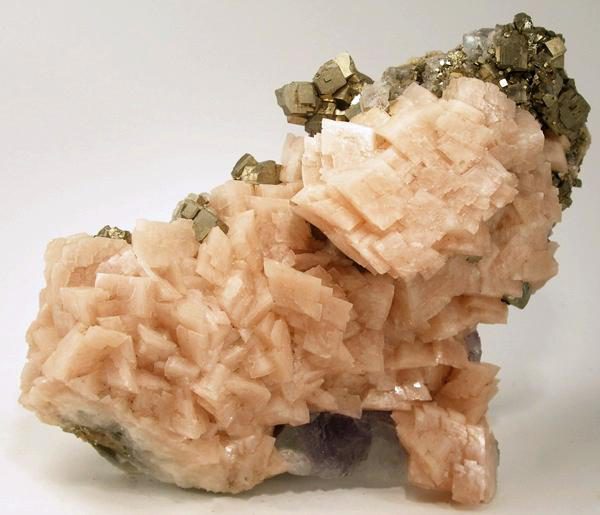
Plate of lustrous flesh-pink dolomite rhombs edged with pyrite cubes and a little purple fluorite.
Photo: Robert M. Lavinsky · CC BY-SA 3.0 · Source

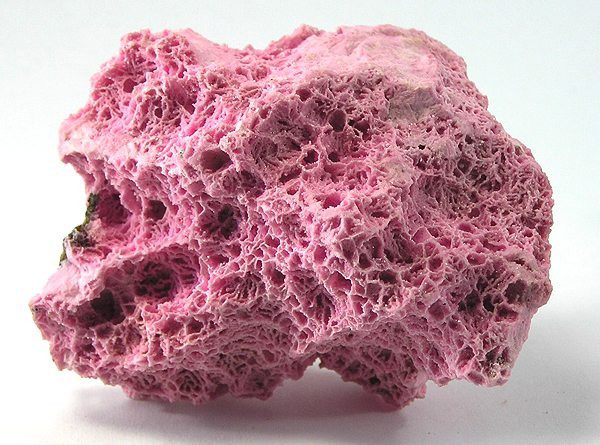
Bright pink cobaltoan dolomite cast after calcite with a sponge-like appearance.
Photo: Robert M. Lavinsky · CC BY-SA 3.0 · Source

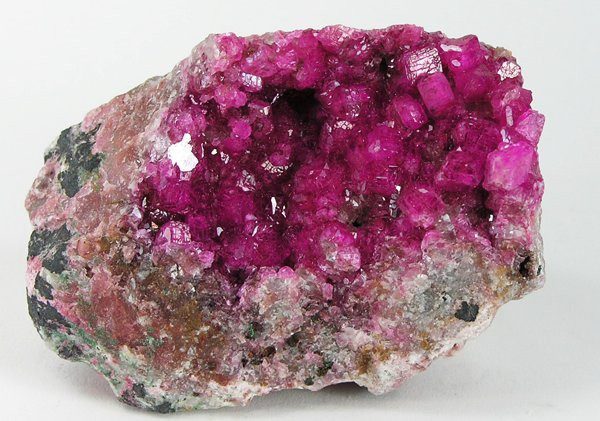
Lustrous vivid pink cobaltoan dolomite rhombs lining a vug in matrix.
Photo: Robert M. Lavinsky · CC BY-SA 3.0 · Source

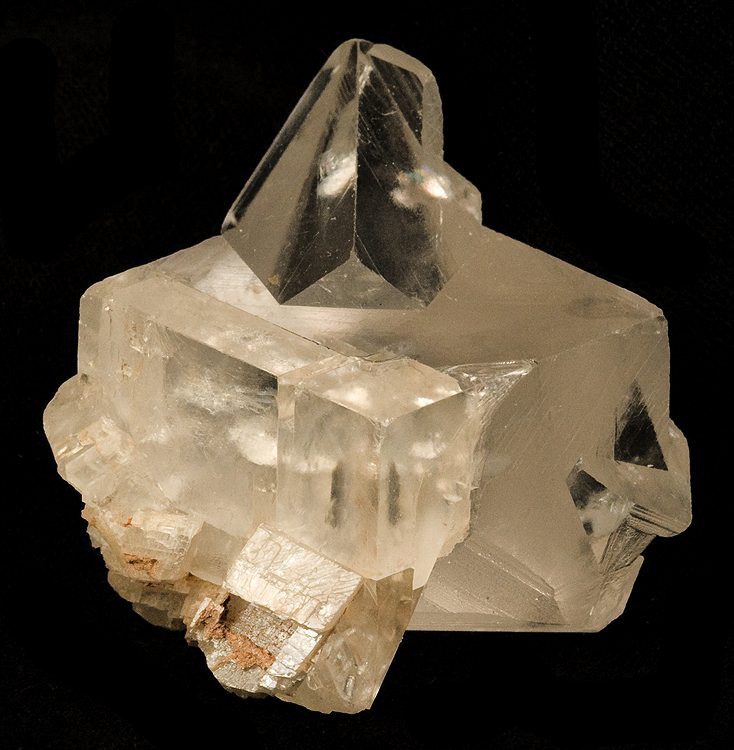
Water-clear, highly lustrous penetration-twinned dolomite crystal.
Photo: Robert M. Lavinsky · CC BY-SA 3.0 · Source

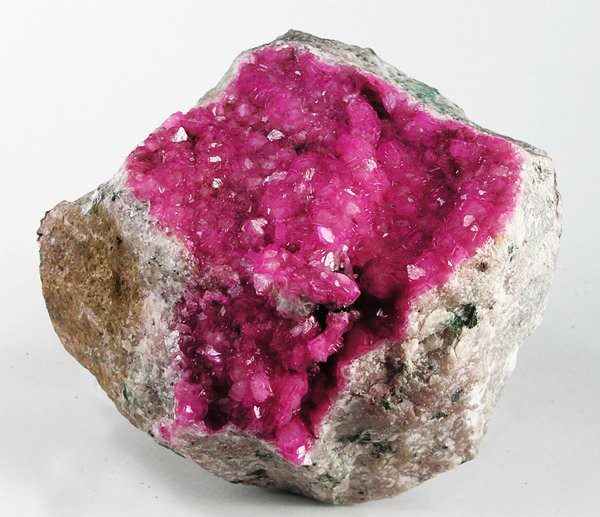
Pocket wall completely lined with lustrous deep pink cobaltoan dolomite crystals (Kolwezi).
Photo: Robert M. Lavinsky · CC BY-SA 3.0 · Source

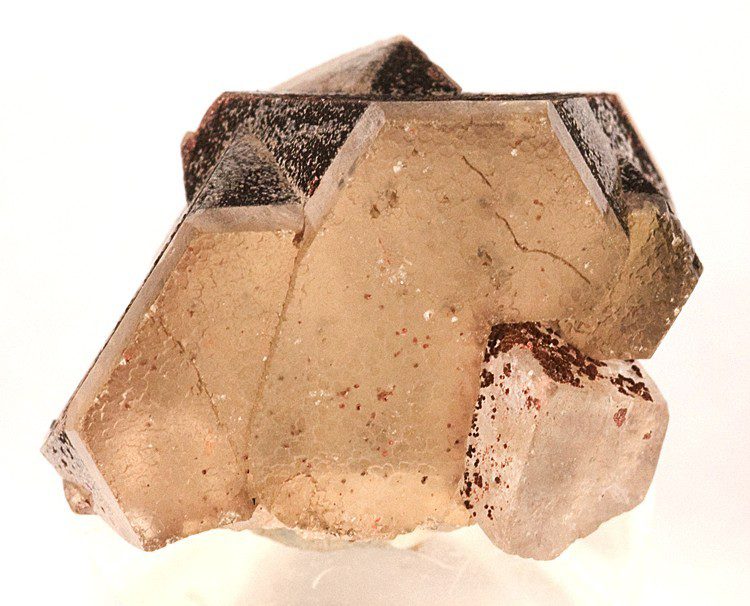
Twinned dolomite crystal with gemmy, lustrous edges, resembling a sandwich.
Photo: Robert M. Lavinsky · CC BY-SA 3.0 · Source

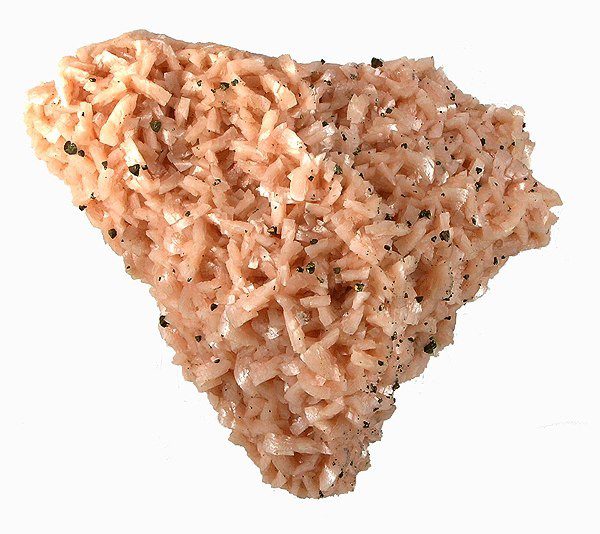
Large plate of shimmering salmon-pink dolomite crystals with small chalcopyrites.
Photo: Robert M. Lavinsky · CC BY-SA 3.0 · Source

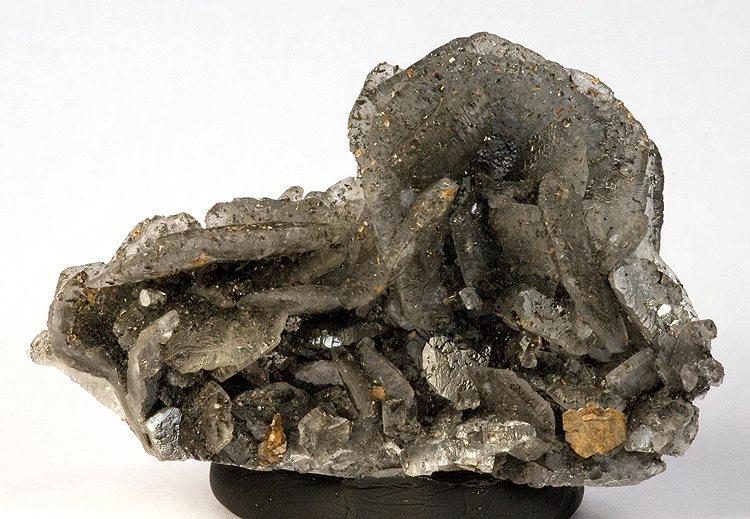
Rosette of glassy, flattened gray dolomite crystals with pyrrhotite on quartz.
Photo: Robert M. Lavinsky · CC BY-SA 3.0 · Source

Where Dolomite is found (24)
Brazil
- Morro Velho Mine (Nova Lima)Minas Gerais · 3 photos
- Serra das Eguas (Brumado)Bahia · 5 photos
Canada
- Pine Point MineNorthwest Territories · 1 photo
China
- Shangbao Pyrite Mine (Leiyang)Hunan · 5 photos
Democratic Republic of the Congo
- Kolwezi area (Musonoi mine)Katanga · 5 photos
- Mashamba West Mine (Kolwezi)Katanga · 5 photos
Mexico
- Ojuela Mine (Mapimi)Durango · 2 photos
- Santa Eulalia Mining DistrictChihuahua · 1 photo
Morocco
- Touissit (Touissit-Bou Beker district)Oriental · 2 photos
Namibia
- Tsumeb MineOshikoto Region · 5 photos
Portugal
- Panasqueira Mine (Covilha)Castelo Branco · 1 photo
Romania
- CavnicMaramures County · 1 photo
Slovakia
- Banska StiavnicaBanska Bystrica Region · 2 photos
Spain
- Azcarate Quarry (Eugui)Navarre · 5 photos
- Salobral ravine (Barranco del Salobral, Teruel)Aragon · 3 photos
Switzerland
- Binntal (Binn valley)Valais · 1 photo
- Tarasp (Scuol, Lower Engadine)Graubünden · 1 photo
United Kingdom
- Beckermet Mine (Egremont)Cumbria · 1 photo
United States
- Binkley-Ober Quarry (East Petersburg)Pennsylvania · 1 photo
- Black Rock (Lawrence County Zinc District)Arkansas · 3 photos
- Corydon (Harrison County)Indiana · 1 photo
- Elmwood Mine (Carthage, Smith County)Tennessee · 2 photos
- Sweetwater MineMissouri · 1 photo
- Treece (Tri-State Mining District, Cherokee County)Kansas · 1 photo
Dolomite on the same specimen with other minerals
1 specimen photo(s) from this locality show chalcopyrite with dolomite together. The pairing comes from the photographer's file name and label, so the relationship between the two minerals is not specified.
1 specimen photo(s) from this locality show galena with dolomite together. The pairing comes from the photographer's file name and label, so the relationship between the two minerals is not specified.
1 specimen photo(s) from this locality show galena with dolomite together. The pairing comes from the photographer's file name and label, so the relationship between the two minerals is not specified.
2 specimen photo(s) from this locality show sphalerite with dolomite together. The pairing comes from the photographer's file name and label, so the relationship between the two minerals is not specified.
1 specimen photo(s) from this locality show pyrite with dolomite together. The pairing comes from the photographer's file name and label, so the relationship between the two minerals is not specified.
1 specimen photo(s) from this locality show dolomite with pyrite together. The pairing comes from the photographer's file name and label, so the relationship between the two minerals is not specified.
1 specimen photo(s) from this locality show dolomite with fluorite together. The pairing comes from the photographer's file name and label, so the relationship between the two minerals is not specified.
1 specimen photo(s) from this locality show dolomite with quartz together. The pairing comes from the photographer's file name and label, so the relationship between the two minerals is not specified.
1 specimen photo(s) from this locality show dolomite with hematite together. The pairing comes from the photographer's file name and label, so the relationship between the two minerals is not specified.
1 specimen photo(s) from this locality show dolomite with pyrrhotite together. The pairing comes from the photographer's file name and label, so the relationship between the two minerals is not specified.
1 specimen photo(s) from this locality show dolomite with quartz together. The pairing comes from the photographer's file name and label, so the relationship between the two minerals is not specified.
1 specimen photo(s) from this locality show dolomite with calcite together. The pairing comes from the photographer's file name and label, so the relationship between the two minerals is not specified.
1 specimen photo(s) from this locality show dolomite with chalcopyrite together. The pairing comes from the photographer's file name and label, so the relationship between the two minerals is not specified.
1 specimen photo(s) from this locality show dolomite with hematite together. The pairing comes from the photographer's file name and label, so the relationship between the two minerals is not specified.
2 specimen photo(s) from this locality show dolomite with quartz together. The pairing comes from the photographer's file name and label, so the relationship between the two minerals is not specified.
1 specimen photo(s) from this locality show siderite with dolomite together. The pairing comes from the photographer's file name and label, so the relationship between the two minerals is not specified.
1 specimen photo(s) from this locality show siderite with dolomite together. The pairing comes from the photographer's file name and label, so the relationship between the two minerals is not specified.
Identity
- Group
- Dolomite group
- Strunz
- 5 Carbonates and nitrates
- Name origin
- Named after the French geologist and naturalist Deodat de Dolomieu (1750-1801), who contributed early descriptions of the mineral in dolostone.
- Elements
- Ca, Mg, C, O
Physical properties
- Color
- Colorless, white, yellow, brown, pale pink; cobalt-bearing material pink to hot pink, copper-bearing material greenish
- Streak
- White
- Luster
- Vitreous luster
- Transparency
- Variable
- Mohs hardness
- 3.5–4
- Density
- 2.86–2.876 g/cm³
- Cleavage / fracture
- Perfect rhombohedral cleavage on {10-11}; parting on {02-21}; fracture subconchoidal; brittle
- Magnetism / fluorescence
- May fluoresce white to pink under UV; triboluminescent
Crystallography
- Crystal system
- Trigonal
- Space group
- R-3
- Structure
- Rhombohedral cell with a = 4.812 A, c = 16.020 A, Z = 3; refined together with calcite, magnesite, siderite and related calcite-type carbonates.
- Typical habit
- Rhombohedra {10-11} combined with {11-20}, tabular on {0001}, often with curved faces; saddle-shaped aggregates; also columnar, stalactitic, granular and massive; crystals to 20 cm
- Twinning
- Simple contact twins on {0001}, {10-10} or {11-20}, common; lamellar twinning on {02-21}
- Optical data
- Uniaxial (-), sometimes anomalously biaxial with small 2V; omega = 1.679, epsilon = 1.500; colorless in transmitted light
Formation and use
- Formation
- Forms by diagenesis or hydrothermal replacement of limestone, as a primary phase in hypersaline sediments, in marbles and contact-metamorphic rocks, as gangue in hydrothermal veins, and in carbonatites and ultramafic rocks.
- Uses
- Main constituent of dolostone, a rock with numerous commercial uses; collector specimens.
Related minerals
- Related minerals
- Ankeritekutnohorite
Sources
- SRC-471 · Book
Handbook of Mineralogy - DolomiteAnthony, J.W.; Bideaux, R.A.; Bladh, K.W.; Nichols, M.C. · 2005 · Mineral Data Publishing / Mineralogical Society of America - SRC-472 · Website
Dolomite - Gallery (Minerals.net)Minerals.net · Minerals.net
Draft data from the Provenite workbook. Check entries against the cited sources before relying on them. Photos are open-licence images from Wikimedia Commons; the author and licence are given with each photo.