About Citrine
SiO₂
The yellow to yellow-orange (sometimes yellow-green) variety of quartz, with weak dichroism in polarized light. The cause of colour in natural citrine is still debated; aluminium-based colour centres created by irradiation, related to those in smoky quartz, are the leading explanation, and this accounts for smoky phantoms and 'smoky citrine'. Natural citrine is very rare and is usually paler, often with a slightly smoky tone. Most citrine on the market is heat-treated amethyst (or heated smoky quartz); its colour comes from fine iron oxides such as hematite and goethite, it shows no dichroism, and strictly it is not citrine. Colour zoning, deepest at crystal tips in geodes, points to heated amethyst. Bicoloured amethyst-citrine (ametrine) from Bolivia is a natural example of citrine sectors.
Photos of Citrine
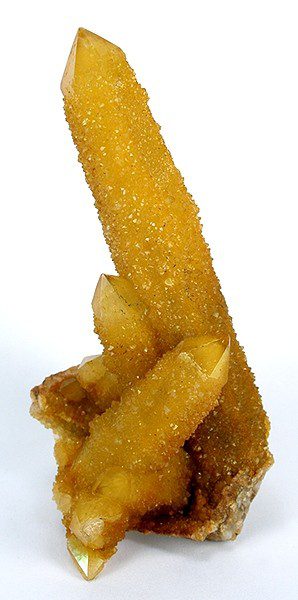
Sparkling orange-yellow citrine-coloured quartz specimen from Boekenhoutshoek, 9.1 cm.
Photo: Robert M. Lavinsky · CC BY-SA 3.0 · Source

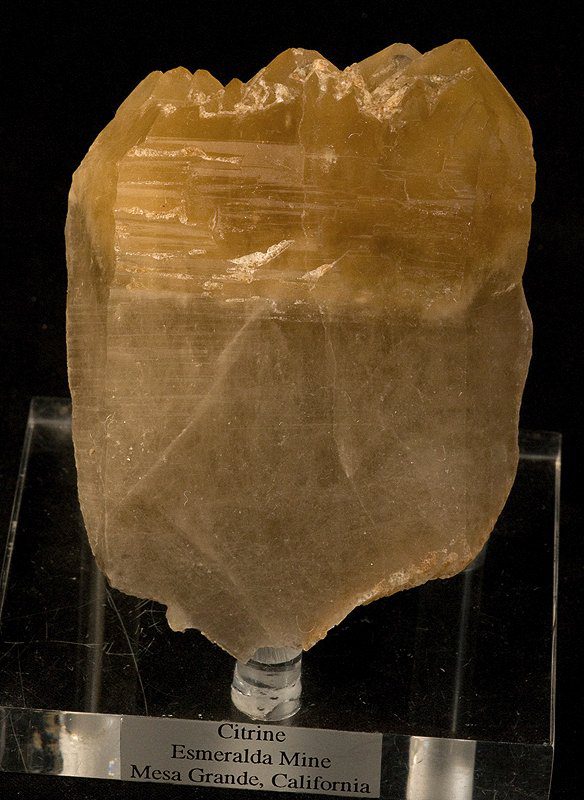
Small-cabinet citrine specimen from the Esmeralda Mine, Mesa Grande District, 8.5 cm.
Photo: Robert M. Lavinsky · CC BY-SA 3.0 · Source

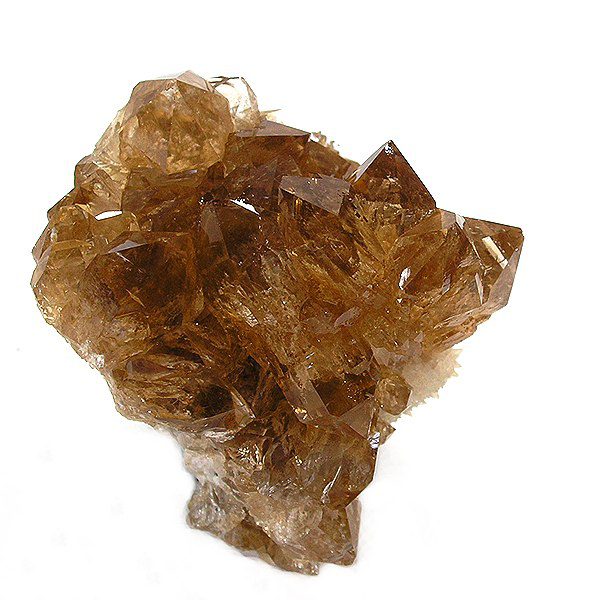
Amber-coloured citrine crystal knob from Charcas, San Luis Potosí, 6.5 cm.
Photo: Robert M. Lavinsky · CC BY-SA 3.0 · Source

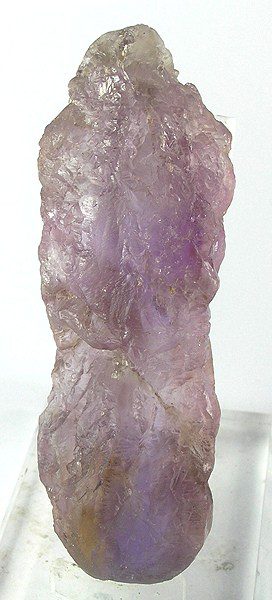
Etched, elongated ametrine crystal (amethyst with yellow citrine hues) from the Anahi Mine, 12.7 cm long.
Photo: Robert M. Lavinsky · CC BY-SA 3.0 · Source

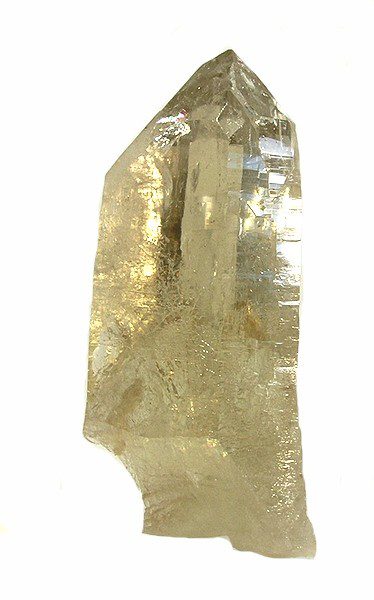
Transparent amber-coloured citrine crystals from the Araçuaí area, Minas Gerais.
Photo: Robert M. Lavinsky · CC BY-SA 3.0 · Source

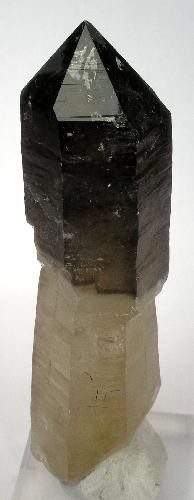
Smoky quartz sceptre on a citrine-coloured shaft from the Goboboseb Mountains, 9.2 cm.
Photo: Robert M. Lavinsky · CC BY-SA 3.0 · Source

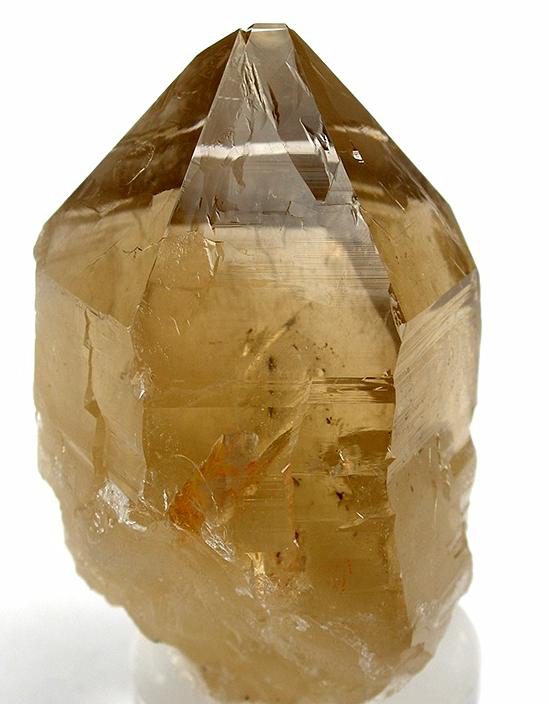
Single sharp, glassy citrine crystal from Hiddenite, North Carolina, 6.5 cm.
Photo: Robert M. Lavinsky · CC BY-SA 3.0 · Source

Where Citrine is found (11)
Bolivia
- Anahi MineSanta Cruz · 3 photos
Brazil
- AraçuaíMinas Gerais · 3 photos
- Conselheiro PenaMinas Gerais
- GalileiaMinas Gerais
- Junco do SeridoParaiba
Mexico
- CharcasSan Luis Potosí · 3 photos
Namibia
- Goboboseb MountainsErongo · 2 photos
South Africa
- Boekenhoutshoek (Boekenhouthoek)Mpumalanga · 3 photos
Spain
- VillasbuenasSalamanca
United States
- Esmeralda MineCalifornia · 3 photos
- Hiddenite (Alexander County)North Carolina · 2 photos
Identity
- Variety of
- Quartz
- Also called
- Bohemian topaz; citron; kundalini quartz; lemon quartz
- Strunz
- 4.DA · 4 Oxides and hydroxides
- IMA status
- Variety
- Name origin
- From 'citrina', for a colour as yellow as a citron (lemon).
- Elements
- Si, O
Physical properties
- Color
- Pale yellow to brownish orange; finest gem colour is saturated yellow to reddish orange; sometimes yellow-green
- Streak
- White
- Luster
- Vitreous luster
- Transparency
- Transparent
- Mohs hardness
- 7
- Density
- 2.65–2.66 g/cm³
- Cleavage / fracture
- Cleavage rarely observable and poor; fracture conchoidal; brittle
Crystallography
- Crystal system
- Trigonal
- Space group
- P3121 or P3221 (enantiomorphic pair)
- Structure
- Framework of corner-sharing SiO4 tetrahedra (tectosilicate); cell a = 4.9135 Å, c = 5.4050 Å, Z = 3.
- Typical habit
- As quartz: prismatic crystals with rhombohedral terminations, striated parallel to the c-axis; also drusy aggregates
- Twinning
- Very common in quartz: Dauphiné law (penetration), Brazil law (penetration) and Japan law (contact)
- Optical data
- Uniaxial (+); omega = 1.544, epsilon = 1.553; birefringence about 0.009
Formation and use
- Formation
- Natural citrine forms where aluminium-rich quartz growth zones are irradiated; it occurs in the same settings as other quartz. Natural amethyst-citrine bicoloured crystals occur in the Anahi mine in Bolivia, and field and experimental work show this combination is natural and not a laboratory product.
- Uses
- Faceted gemstone; sizes up to about 20 carats are readily available in jewellery. Also collected as crystal specimens.
- Stability and care
- Heating pales natural citrine above roughly 200-500 C and irradiation can restore the colour. Heat-treated amethyst colours are stable under normal storage and wear. Most commercial citrine is heat-treated amethyst; such treatment is not always disclosed. Avoid dry grinding, which produces hazardous quartz dust.
Related minerals
- Related minerals
- Quartzamethystsmoky quartzametrine
- Polymorphs
- Cristobalitetridymitecoesitestishovite
- Can be confused with
- Topaz (harder, Mohs 8historically confused with citrine)heat-treated amethystheat-treated smoky quartziron-oxide-stained quartz
Sources
- SRC-084 · Book
Handbook of Mineralogy - QuartzAnthony, J.W.; Bideaux, R.A.; Bladh, K.W.; Nichols, M.C. · 2001 · Mineralogical Society of America / Mineral Data Publishing - SRC-085 · Database
Quartz (Mindat.org mineral page)Mindat.org / Hudson Institute of Mineralogy - SRC-100 · Database
Citrine: Mineral information, data and localitiesMindat.org - SRC-101 · Website
Citrine DescriptionGemological Institute of America (GIA) - SRC-113 · Website
Rio Grande citrineSkyjems (seller) - SRC-117 · Article
Amethyst-citrine (ametrine) from the Anahi mine, BoliviaVasconcelos, L.; et al. (as given in the URL; not verified) · 1994 · Gems & Gemology (Spring 1994)
Draft data from the Provenite workbook. Check entries against the cited sources before relying on them. Photos are open-licence images from Wikimedia Commons; the author and licence are given with each photo.