Smoky Hawk claim
39.0000° N, 105.0000° W · ± 10 km
Microcline and Smoky quartz from Colorado, United States, with photos of specimens from this locality.
Minerals found here
On the same specimen
1 specimen photo(s) from this locality show quartz with microcline together. The pairing comes from the photographer's file name and label, so the relationship between the two minerals is not specified.
2 specimen photo(s) from this locality show microcline with quartz together. The pairing comes from the photographer's file name and label, so the relationship between the two minerals is not specified.
Microcline at Smoky Hawk claim
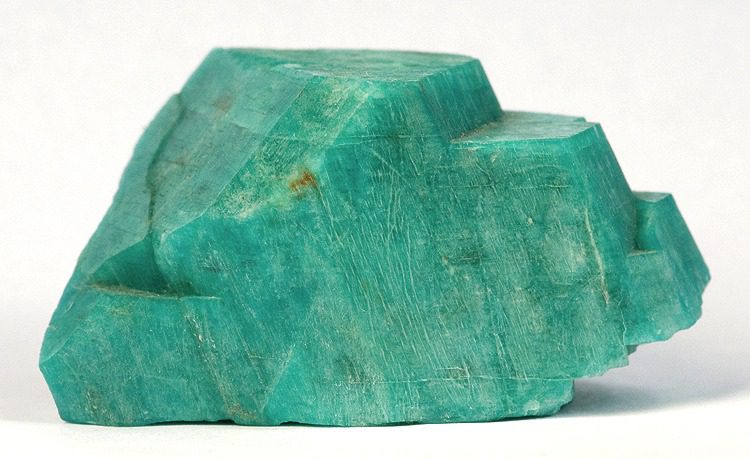
Photo: Robert M. Lavinsky · CC BY-SA 3.0 · Source

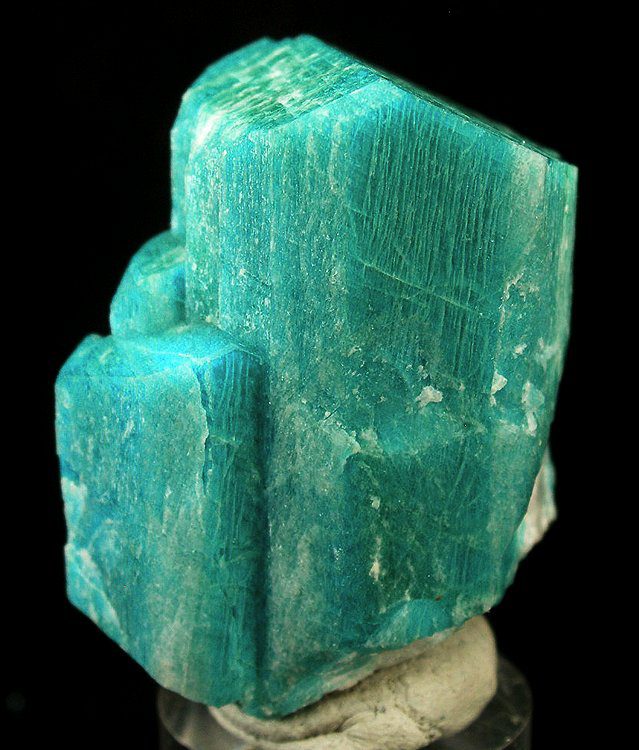
Photo: Robert M. Lavinsky · CC BY-SA 3.0 · Source

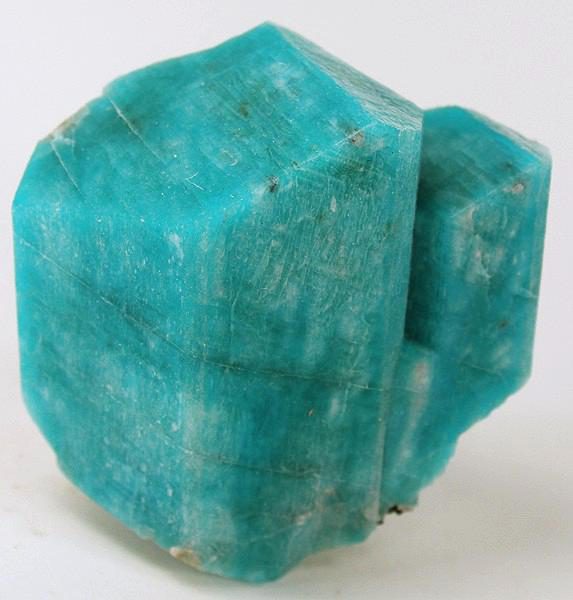
Photo: Robert M. Lavinsky · CC BY-SA 3.0 · Source

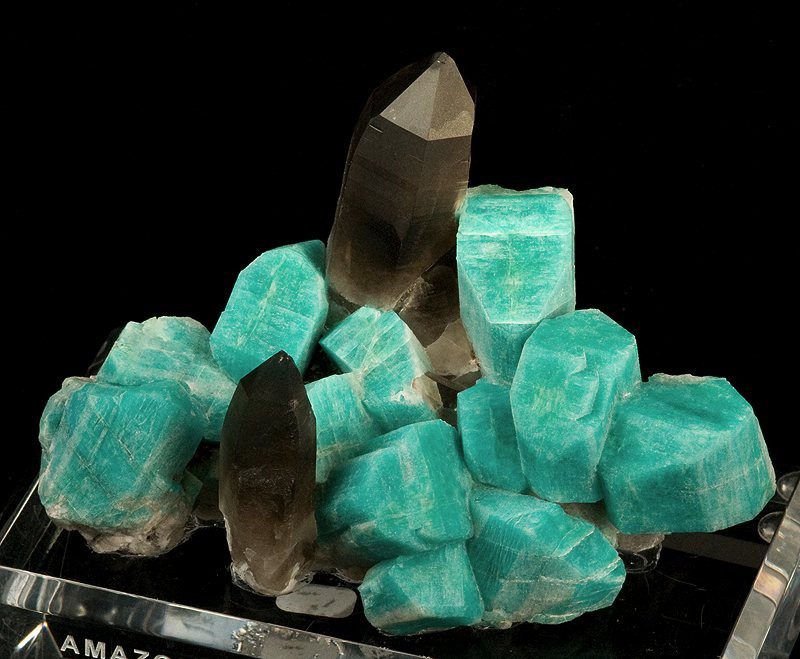
Photo: Robert M. Lavinsky · CC BY-SA 3.0 · Source

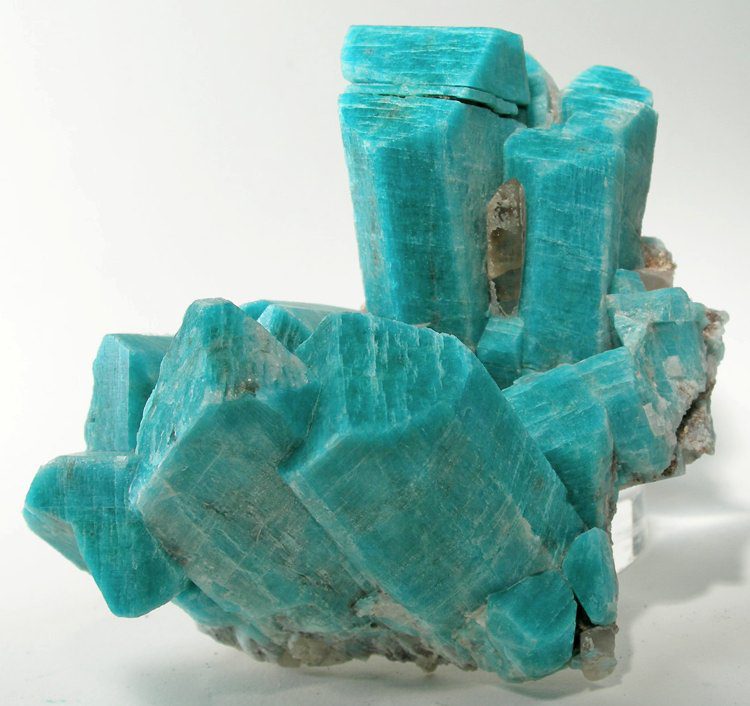
Photo: Robert M. Lavinsky · CC BY-SA 3.0 · Source

- Formula
- KAlSi₃O₈
- Morphology
- Sharp crystals and intergrown groups, some stepped Manebach twins
- Typical size
- Crystals about 4 to 6 cm; matrix pieces to 11 cm
- Color / luster
- Amazonite: turquoise blue, above average for Colorado
- Associated minerals
- Smoky quartz
- Twins
- Manebach twins
- Availability
- Unknown
- History
- Productive recent mining, including 2005
Sources: SRC-581
Smoky quartz at Smoky Hawk claim
Smoky quartz combined with blue-green amazonite from miarolitic pockets in rare-earth pegmatites.
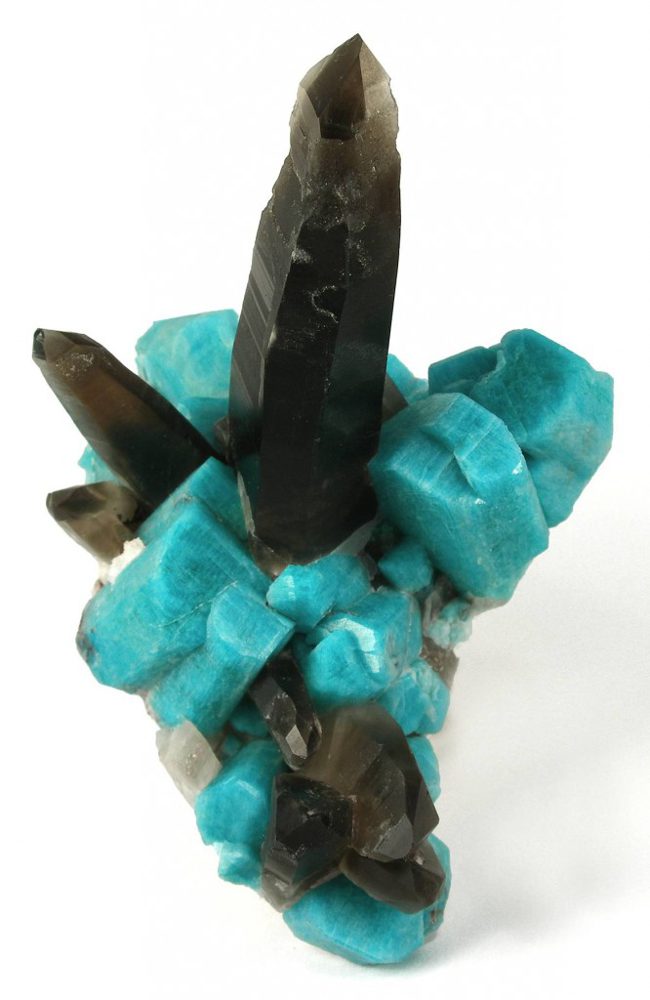
Photo: Robert M. Lavinsky · CC BY-SA 3.0 · Source

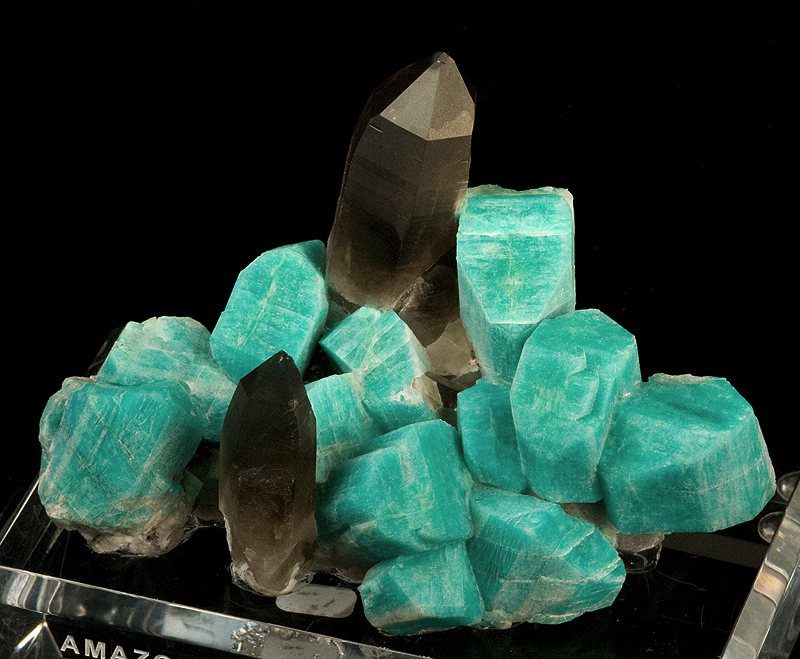
Photo: Robert M. Lavinsky · CC BY-SA 3.0 · Source

- Formula
- SiO₂
- Morphology
- Crystals in pegmatite pockets together with amazonite
- Typical size
- A kite-shaped cavity about 6 by 8.5 feet (2012) yielded roughly one ton of crystals, from which a plate of nearly 3 by 2 feet was assembled
- Associated minerals
- Microcline (amazonite)albite (cleavelandite)fluoritebiotitegoethitehematitemicro-minerals include bastnaesite, bertrandite, cassiterite, milarite, monazite, phenakite, rutile, xenotime and zircon
- Trace elements
- Aluminium-related colour centres produced by natural irradiation (general for the variety, not locality-specific)
- History
- The batholith has been known for amazonite and smoky quartz combination specimens since the late 1870s. Over 1,000 pockets have been dug on the Smoky Hawk claim, 14 of them major; the 2012 plate, the 'Smoky Hawk King', is at the Denver Museum of Nature and Science.
Geology of the locality
- Setting
- Rare-earth (niobium-yttrium-fluorine type) pegmatites with abundant miarolitic cavities (pockets) in the Pikes Peak batholith.
- Host rock
- Pikes Peak granite pegmatite
- Region
- Colorado
- Country
- United States
Coordinates are the rounded position that Mindat gives for the Hawk Feathers pocket on this claim (stated margin about 3 km), so only district-level accuracy is claimed. The claim was filed in 1998 and pockets have been in production since 2003; current status is not stated.
Sources
- SRC-135 · Article
Amazonite and Smoky Quartz Mining on the Smoky Hawk Claim, Teller County, ColoradoDorris, J. · 2015 · New Mexico Mineral Symposium (36th), abstracts pp. 11-12 - SRC-136 · Database
Hawk Feathers pocket, Smoky Hawk claim, Crystal Peak, Teller County, Colorado, USAMindat.org contributors · Mindat.org - SRC-581 · Website
File:Microcline-255001.jpgRobert M. Lavinsky · Wikimedia Commons
Draft data from the Provenite workbook. Check entries against the cited sources before relying on them. Photos are open-licence images from Wikimedia Commons; the author and licence are given with each photo.