About Pyrite
FeS₂
The most common sulfide mineral on Earth, recognizable by its metallic, brass-yellow color and often sharp cubic or pyritohedral crystals.
Photos of Pyrite
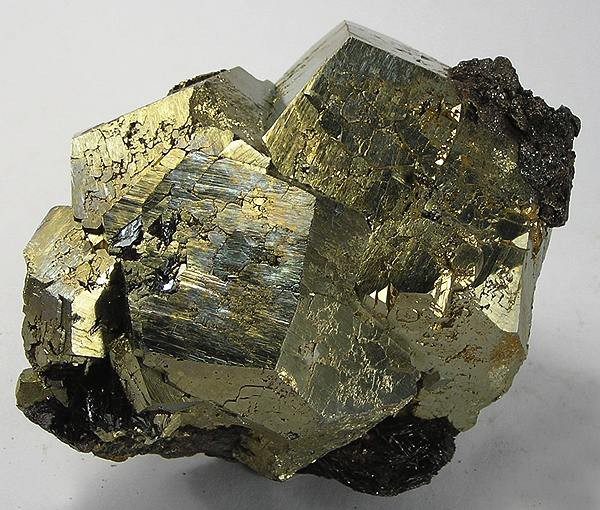
Cluster of large pyrite crystals from the iron mines of Rio Marina, Elba.
Photo: Robert M. Lavinsky · CC BY-SA 3.0 · Source

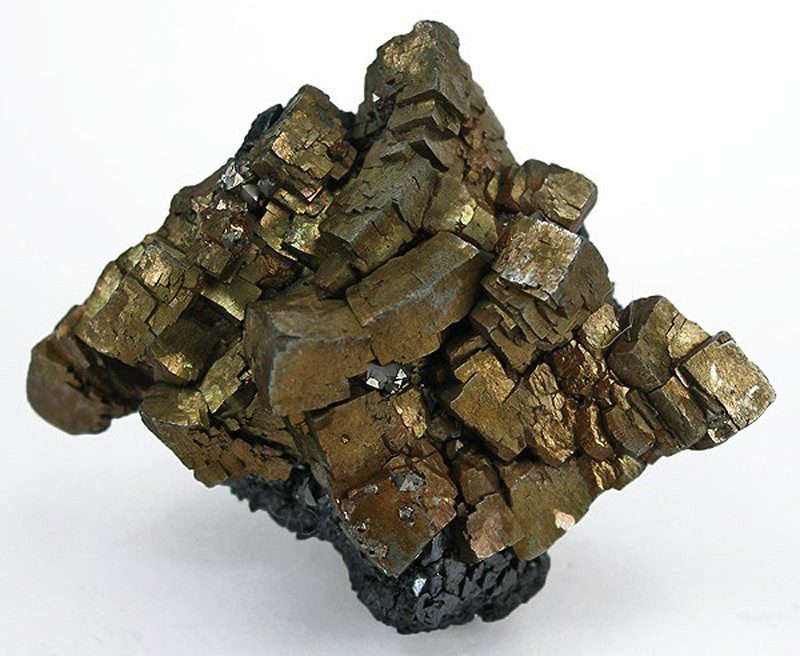
Antique specimen of sharp pyrite crystals from the French Creek mines, Pennsylvania.
Photo: Robert M. Lavinsky · CC BY-SA 3.0 · Source

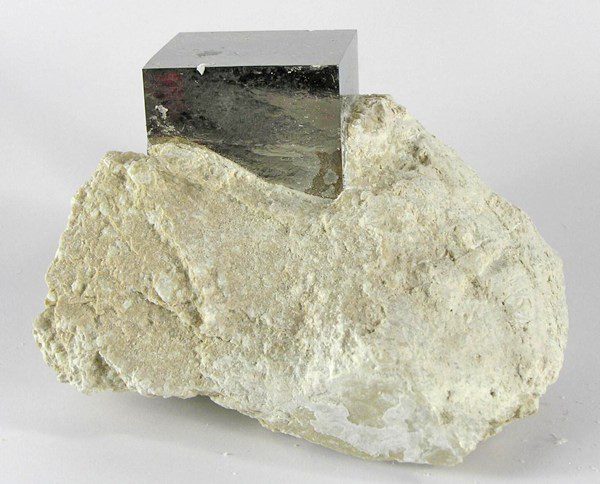
Sharp pyrite cubes on clay-rich matrix from the Ampliacion a Victoria mine, Navajun, Spain.
Photo: Robert M. Lavinsky · CC BY-SA 3.0 · Source

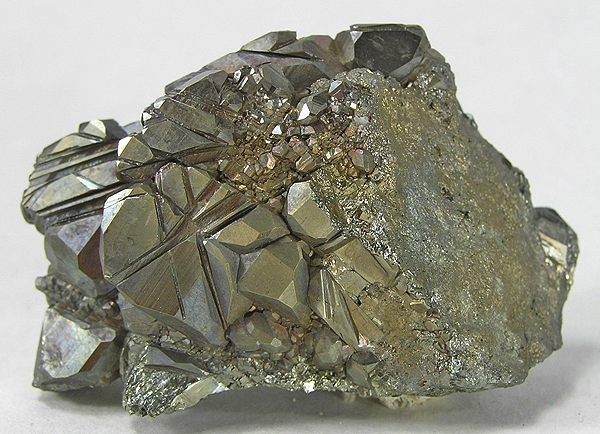
Complex, modified pyrite crystals from the Nanisivik Mine on Baffin Island.
Photo: Robert M. Lavinsky · CC BY-SA 3.0 · Source

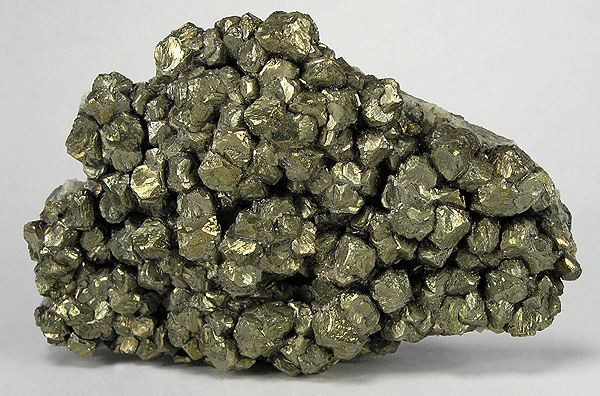
Plate of octahedral pyrite crystals with complex sub-faces from the Sweetwater Mine, Missouri.
Photo: Robert M. Lavinsky · CC BY-SA 3.0 · Source

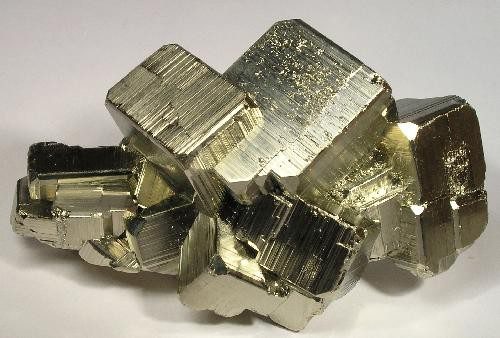
Group of bevelled, striated pyrite cubes from the Huanzala Mine, Peru.
Photo: Robert M. Lavinsky · CC BY-SA 3.0 · Source

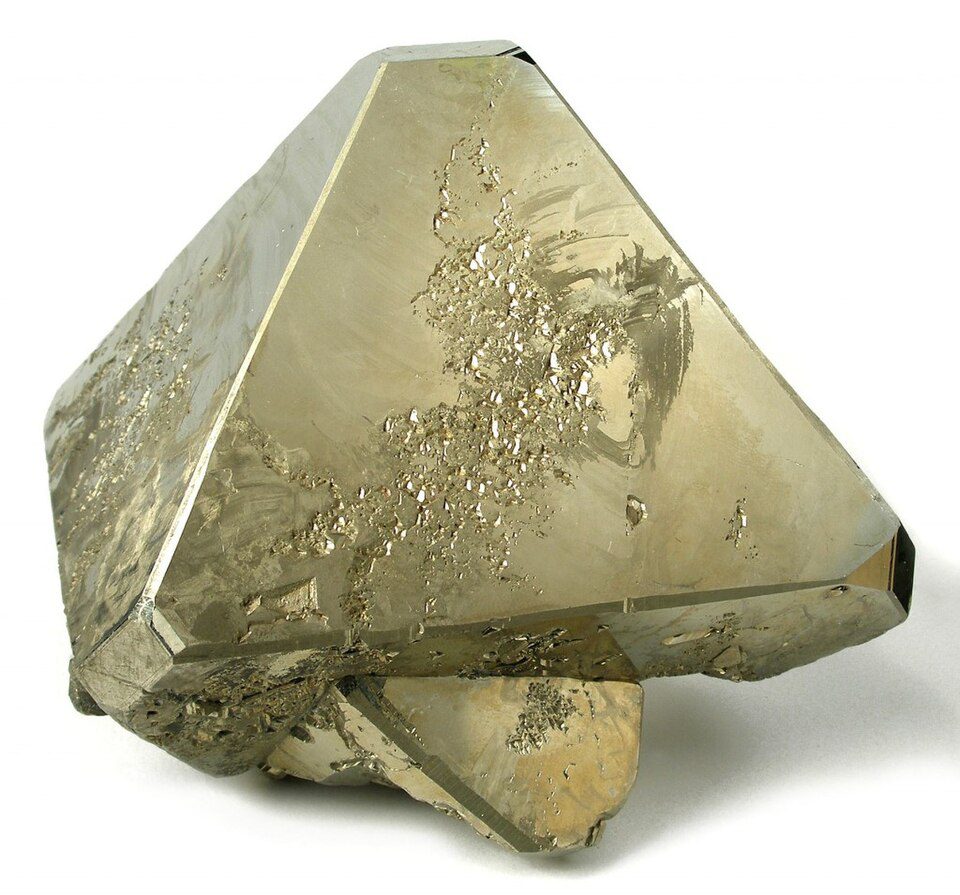
Large single octahedral pyrite crystal from the Huaron mining district, Peru.
Photo: Robert M. Lavinsky · CC BY-SA 3.0 · Source

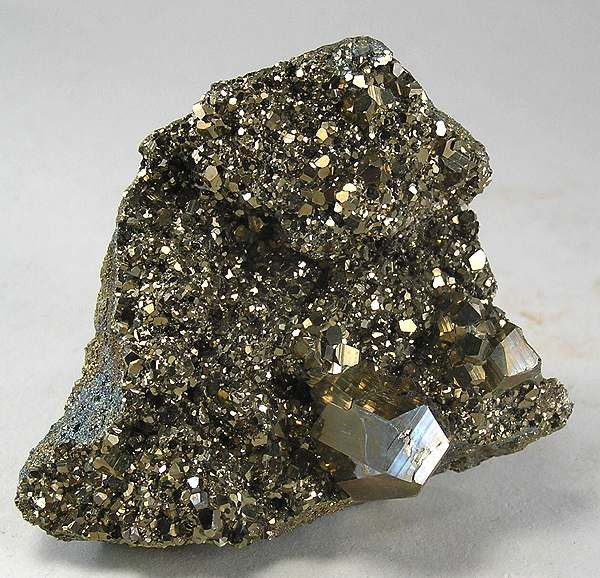
Cluster of lustrous golden pyrite crystals from the Quiruvilca Mine, Peru.
Photo: Robert M. Lavinsky · CC BY-SA 3.0 · Source

Where Pyrite is found (17)
Canada
- Nanisivik MineNunavut · 3 photos
Italy
- Rio MarinaElba · 3 photos
- TraversellaPiemonte
Kosovo
- Trepca complexMitrovica District
Peru
- HuanzalaAncash · 3 photos
- Huarón Mine (Huarón Mining District)Pasco · 3 photos
- QuiruvilcaLa Libertad · 3 photos
Romania
- CavnicMaramures County
Russia
- DalnegorskPrimorsky Krai
Spain
- Ampliacion a Victoria MineLa Rioja · 3 photos
United States
- Butte Mining DistrictMontana · 3 photos
- Cole Mine (Cole shaft), BisbeeArizona · 2 photos
- Eagle Mine (Gilman)Colorado · 3 photos
- French Creek Mines (St. Peters)Pennsylvania · 3 photos
- Middleville (Herkimer diamond district)New York
- SpartaIllinois · 3 photos
- Sweetwater MineMissouri · 3 photos
Pyrite on the same specimen with other minerals
Huanzala specimens show sharp, lustrous octahedral pyrite crystals (to about 2 cm) on the face of a crystallized quartz matrix; other pieces show glassy quartz crystals with pyrite scattered through them.
Bright golden pyrite against glassy quartz is one of the best-known Peruvian combination pieces.
A large Cavnic specimen carries pastel purple, lightly frosted amethyst clusters to about 5 cm on a plate covered with brass-yellow striated pyrite crystals.
Amethyst of this size is described as rare from the Cavnic mines, and the golden pyrite base adds contrast.
Herkimer-type quartz crystals commonly contain small inclusions of minerals, including pyrite, alongside calcite, dolomite and sphalerite.
Inclusions inside the clear, doubly terminated crystals add interest and are prized in Herkimer quartz.
Sources: SRC-139
1 specimen photo(s) from this locality show pyrite with quartz together. The pairing comes from the photographer's file name and label, so the relationship between the two minerals is not specified.
1 specimen photo(s) from this locality show pyrite with chalcopyrite together. The pairing comes from the photographer's file name and label, so the relationship between the two minerals is not specified.
1 specimen photo(s) from this locality show pyrite with sphalerite together. The pairing comes from the photographer's file name and label, so the relationship between the two minerals is not specified.
1 specimen photo(s) from this locality show pyrite with dolomite together. The pairing comes from the photographer's file name and label, so the relationship between the two minerals is not specified.
1 specimen photo(s) from this locality show dolomite with pyrite together. The pairing comes from the photographer's file name and label, so the relationship between the two minerals is not specified.
2 specimen photo(s) from this locality show siderite with pyrite together. The pairing comes from the photographer's file name and label, so the relationship between the two minerals is not specified.
1 specimen photo(s) from this locality show siderite with pyrite together. The pairing comes from the photographer's file name and label, so the relationship between the two minerals is not specified.
1 specimen photo(s) from this locality show enargite with pyrite together. The pairing comes from the photographer's file name and label, so the relationship between the two minerals is not specified.
1 specimen photo(s) from this locality show enargite with pyrite together. The pairing comes from the photographer's file name and label, so the relationship between the two minerals is not specified.
1 specimen photo(s) from this locality show enargite with pyrite together. The pairing comes from the photographer's file name and label, so the relationship between the two minerals is not specified.
2 specimen photo(s) from this locality show enargite with pyrite together. The pairing comes from the photographer's file name and label, so the relationship between the two minerals is not specified.
1 specimen photo(s) from this locality show bornite with pyrite together. The pairing comes from the photographer's file name and label, so the relationship between the two minerals is not specified.
1 specimen photo(s) from this locality show bornite with pyrite together. The pairing comes from the photographer's file name and label, so the relationship between the two minerals is not specified.
1 specimen photo(s) from this locality show rhodochrosite with pyrite together. The pairing comes from the photographer's file name and label, so the relationship between the two minerals is not specified.
1 specimen photo(s) from this locality show rhodochrosite with pyrite together. The pairing comes from the photographer's file name and label, so the relationship between the two minerals is not specified.
1 specimen photo(s) from this locality show rhodochrosite with pyrite together. The pairing comes from the photographer's file name and label, so the relationship between the two minerals is not specified.
1 specimen photo(s) from this locality show rhodochrosite with pyrite together. The pairing comes from the photographer's file name and label, so the relationship between the two minerals is not specified.
Identity
- Also called
- fool's gold
- Group
- Pyrite Group
- Strunz
- 2.EB.05a · 2 Sulfides and sulfosalts
- IMA status
- Grandfathered
- Name origin
- From Greek 'pyrites (lithos)': stone that strikes fire (pyr = fire); pyrite can produce sparks.
- Elements
- Fe, S
Physical properties
- Color
- Pale brass-yellow to golden yellow; may tarnish
- Streak
- Greenish black to brownish black
- Luster
- Metallic luster
- Transparency
- Opaque
- Mohs hardness
- 6–6.5
- Density
- 4.95–5.1 g/cm³
- Cleavage / fracture
- Cleavage poorly developed; fracture conchoidal to uneven; brittle
- Magnetism / fluorescence
- Paramagnetic; no fluorescence reported
Crystallography
- Crystal system
- Cubic
- Space group
- Pa-3
- Structure
- Pyrite structure: Fe atoms octahedrally coordinated by S; sulfur occurs as S-S disulfide pairs.
- Typical habit
- Cube, pentagonal dodecahedron (pyritohedron), octahedron; also massive, framboidal, and as concretions
- Twinning
- Iron Cross (penetration twin of two pyritohedra)
- Optical data
- Opaque; generally isotropic in reflected light with high reflectance, but weak anisotropy is rarely observed; no transmitted-light refractive index can be determined
Formation and use
- Formation
- Hydrothermal veins, sedimentary rocks (concretions, framboids), metamorphic rocks, and magmatic sulfide deposits.
- Uses
- Historically used for fire-starting and sulfuric acid production; accessory mineral in gold and copper ores; collector's specimen.
- Stability and care
- Can oxidize in moist conditions ('pyrite disease'), forming sulfates and acid; store dry and at low relative humidity.
Related minerals
- Related minerals
- Cattieritevaesitehauerite (pyrite group)
- Polymorphs
- Marcasite
- Can be confused with
- Goldchalcopyritemarcasite
Sources
- SRC-001 · Book
Handbook of Mineralogy - PyriteAnthony, J.W.; Bideaux, R.A.; Bladh, K.W.; Nichols, M.C. · Mineralogical Society of America
Draft data from the Provenite workbook. Check entries against the cited sources before relying on them. Photos are open-licence images from Wikimedia Commons; the author and licence are given with each photo.